When Virtual Stands Roar: Dynamic Soundscapes Shape Tactics Across Online Soccer, Basketball, and Baseball Matches
Clara Lehmann · May 30, 2026

When Virtual Stands Roar: Dynamic Soundscapes Shape Tactics Across Online Soccer, Basketball, and Baseball Matches
Online sports simulations have integrated audio systems that respond to gameplay events in real time, and these systems now influence how participants adjust their approaches during matches in soccer, basketball, and baseball formats. Developers have refined spatial audio rendering and adaptive crowd layers since the mid-2020s, which means sound levels rise or fall based on score margins, time remaining, and collective player actions rather than following fixed loops. Observers note that these changes create measurable differences in decision speed, with data from platform analytics showing reduced pass completion rates when decibel spikes occur during critical sequences.
Audio Layers in Soccer Simulations
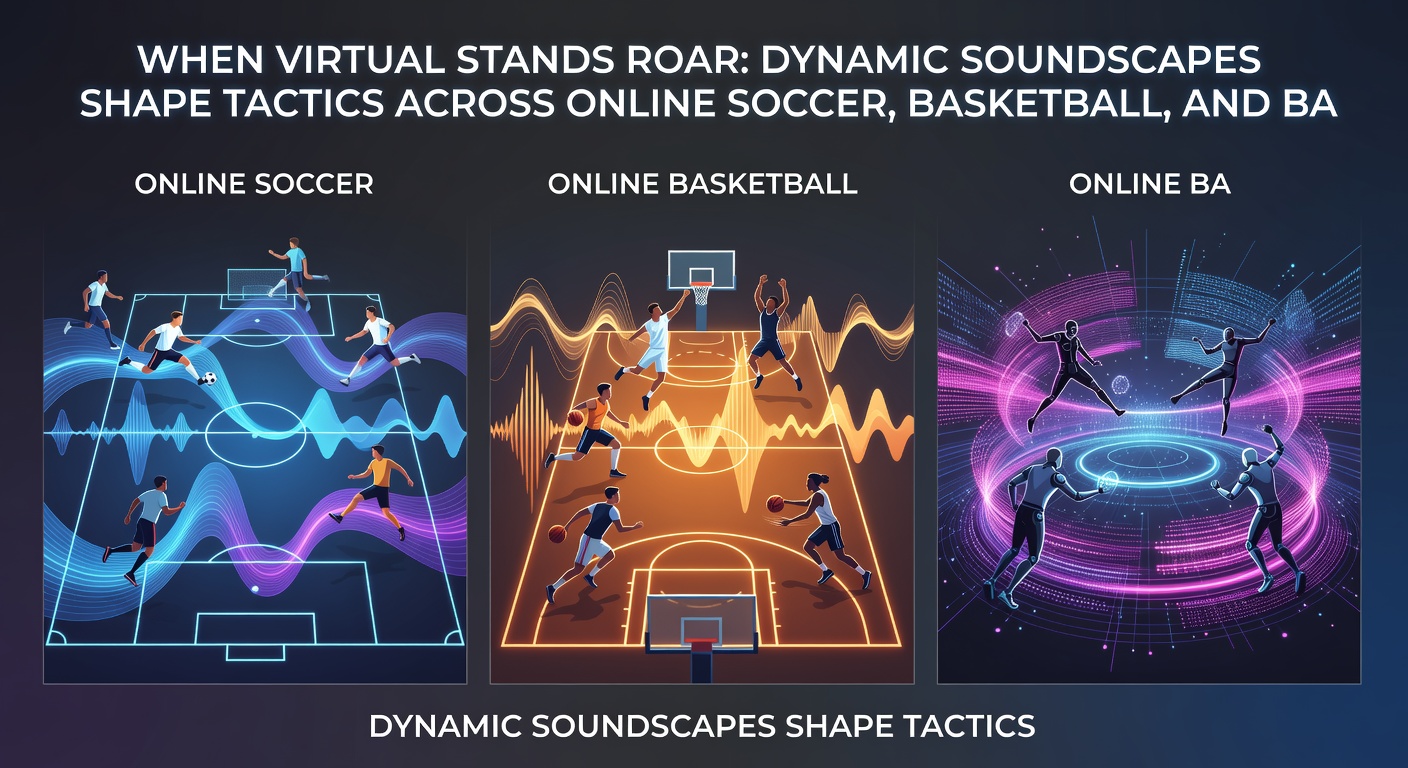
Virtual soccer environments employ layered crowd tracks that intensify when possession shifts near the penalty area, and players must account for these volume increases because they mask communication channels between teammates. Research from European gaming institutes indicates that squads using voice chat experience a 12 percent drop in coordinated build-up play during peak noise intervals, prompting teams to rely more on pre-set visual signals instead of verbal calls. In May 2026 several major titles updated their audio engines to include stadium-specific reverb models, which further alters how far instructions travel across the pitch depending on whether the match occurs in an open bowl or enclosed arena.
Coaches in competitive leagues have adapted training regimens to include noise-filtering drills, and participants report that they now scan radar overlays more frequently when ambient roar peaks. This adjustment stems from engine mechanics that tie crowd intensity directly to momentum meters, creating feedback loops where successful dribbles quiet sections of the stands while turnovers trigger immediate surges. Those who have analyzed match logs across thousands of sessions find that defensive lines compress earlier in high-noise conditions, reducing space for through balls yet increasing the frequency of long-range attempts.
Basketball Court Acoustics and Decision Making
Basketball simulations apply directional audio that emphasizes home-crowd effects during fast breaks, and these directional cues prompt defenders to rotate toward the stronger sound source even when visual data suggests otherwise. Studies conducted by North American research groups reveal that shot selection shifts toward mid-range attempts when crowd volume exceeds threshold values, because the audio masking reduces the perceived reliability of teammate positioning data. Game designers have tied these effects to fatigue variables, so late-quarter noise spikes compound with stamina depletion and produce higher turnover counts in documented tournament data.
Teams have begun incorporating audio calibration into pre-match scouting, reviewing recordings of opponent home arenas to anticipate how specific decibel patterns will affect spacing. One documented case involved a league that adjusted its timeout call frequency after internal statistics showed that noise-induced miscommunications accounted for 18 percent of end-of-quarter errors across a full season. The integration of real-time crowd sentiment algorithms means that consecutive successful possessions can trigger opposing volume drops, giving the trailing side brief windows of clearer auditory feedback that influence whether they push transition offense or reset into half-court sets.
Baseball Stadium Sound and Pitching Strategy
Baseball titles model stadium acoustics that fluctuate with count leverage and inning progression, and pitchers adjust their repertoire selection when the engine amplifies certain seating sections during two-strike situations. According to reports compiled by the Interactive Games and Entertainment Association in Australia, catchers call fewer breaking balls when crowd intensity masks subtle glove-tap signals, leading to increased fastball usage in high-leverage counts. Outfield positioning also changes because audio occlusion effects make it harder to judge ball trajectory when cheering overlaps with bat-contact sounds, prompting managers to favor shifts that rely on visual tracking rather than auditory cues.
Developers introduced positional audio panning in recent patches, which means left-field crowds affect left-handed batters differently than right-field sections influence right-handed swings. Players who review pitch logs discover that they throw more off-speed pitches early in counts when stadium reverb extends the perceived duration of prior cheers, creating a timing disruption that carries over into subsequent at-bats. League-wide data from 2025 through May 2026 shows that teams with superior noise-adaptation training maintain higher on-base percentages in road simulations compared with squads that train in silent environments.
Cross-Sport Patterns and Platform Developments
Across the three sports, developers have converged on similar middleware solutions for dynamic mixing, and these shared tools allow sound designers to link crowd energy directly to gameplay metrics such as possession time or scoring streaks. Industry analyses from the Entertainment Software Association indicate that titles incorporating adaptive audio retain players for longer average session durations because the feedback loop between action and sound keeps engagement elevated. Yet the same reports note that accessibility options now include separate volume sliders for crowd layers, enabling participants who prefer reduced auditory interference to maintain tactical consistency without altering core mechanics.
Platform updates scheduled for late 2026 aim to introduce machine-learning models that personalize crowd responses based on individual playstyle history, which could further differentiate how each participant experiences the same match environment. Those reviewing early beta footage observe that the new systems generate unique sound profiles for every user account, meaning two teammates might hear different volume distributions even while occupying identical virtual positions.
Conclusion
Dynamic soundscapes have become integral components of tactical planning in online soccer, basketball, and baseball simulations because they directly modulate information availability and decision timing. As audio engines continue to evolve through 2026 and beyond, participants and developers alike track how these systems reshape competitive patterns across platforms, with data sets expanding to capture minute variations in performance linked to specific acoustic conditions.