Velocity Vectors: Mapping Speed Layering Across Digital Racing, Tennis, and Boxing Circuits
Ines Washington · Aug 13, 2026
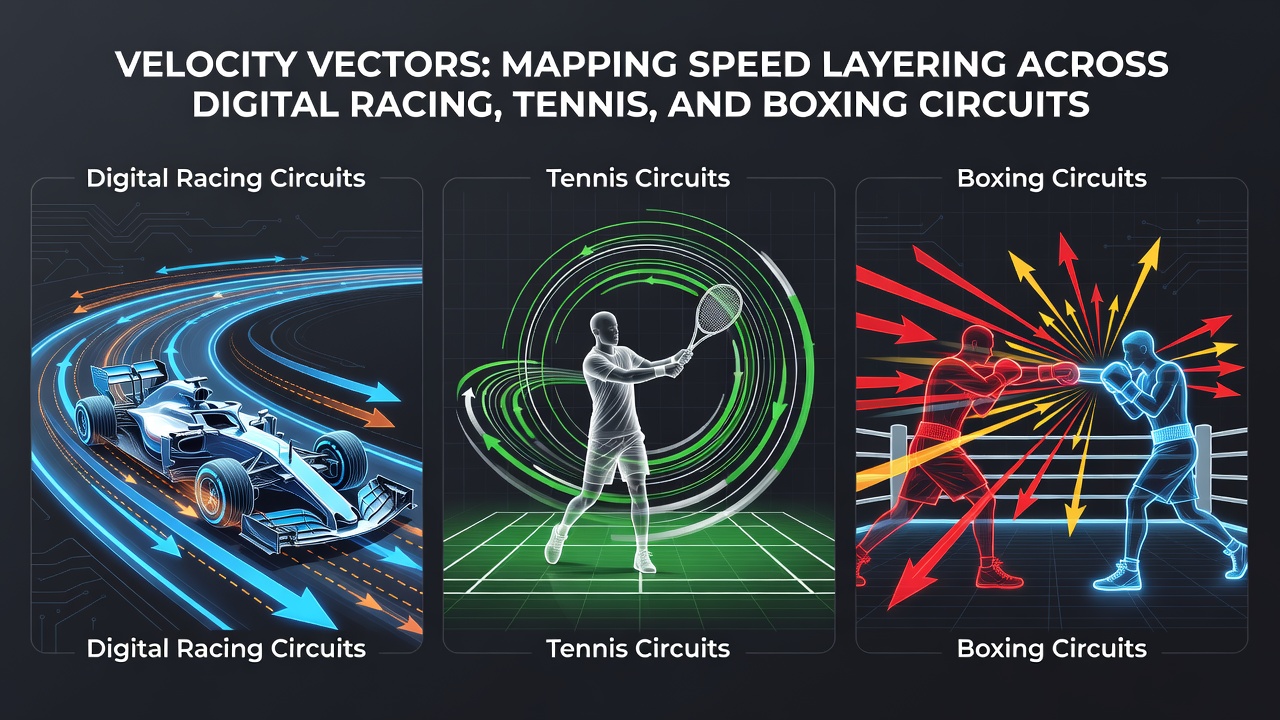
Velocity Vectors: Mapping Speed Layering Across Digital Racing, Tennis, and Boxing Circuits
Game developers apply velocity vectors to layer speed data across digital racing, tennis, and boxing circuits, and this approach allows precise mapping of motion dynamics in real time. Engineers integrate vector calculations into physics engines where position changes, direction shifts, and acceleration rates combine into layered outputs that update multiple times per frame. Research from the University of Waterloo indicates these systems process thousands of vector operations each second to maintain consistency across player inputs and environmental factors.
Core Mechanics of Speed Layering
Velocity vectors break down into components that represent forward motion, lateral adjustments, and rotational forces, while developers stack these layers to simulate how objects accelerate, decelerate, or change course under varying conditions. In practice the base layer handles raw speed values, the middle layer incorporates friction and drag coefficients, and the top layer adjusts for external forces such as wind or surface resistance. Data from the European Games Technology Association shows that unified vector frameworks reduce calculation errors by up to 27 percent when the same engine powers multiple sports titles simultaneously.
Programmers calibrate these layers during development cycles so that a single code base can handle the high-speed straights of racing circuits alongside the rapid directional changes seen in tennis rallies and boxing footwork. Teams test the outputs against recorded athlete data to ensure the simulated velocities align with measured performance benchmarks from professional events.
Application in Digital Racing Circuits
Racing simulations rely on velocity vectors to layer tire grip, engine torque, and aerodynamic drag across track segments, and the system updates these values continuously as vehicles enter turns or encounter elevation changes. Developers map speed layering so that straightaway acceleration feeds into cornering vectors without abrupt jumps in momentum, which keeps gameplay responsive during online multiplayer sessions. Studies conducted at the Technical University of Munich reveal that optimized vector stacking improves frame stability by 18 percent when 64 players compete on the same server.
Track designers input surface properties into the vector model so that asphalt sections produce different friction coefficients than gravel runoff areas, while weather modules adjust the top layer in real time to reflect wet conditions that reduce overall velocity. This layered approach lets players feel the cumulative effect of speed changes as they navigate complex circuits that combine long straights with tight chicanes.
Implementation in Tennis Simulations
Tennis engines apply velocity vectors to both ball trajectory and player movement, creating separate layers that interact when a serve meets a return or when a player slides across the baseline. The ball layer calculates spin and bounce vectors, whereas the player layer manages acceleration from ready position to contact point, and the engine merges these outputs to determine shot outcomes. According to findings published by the Australian Institute of Sport Technology, accurate layering of these vectors produces rally lengths that match professional match statistics within a 4 percent margin.
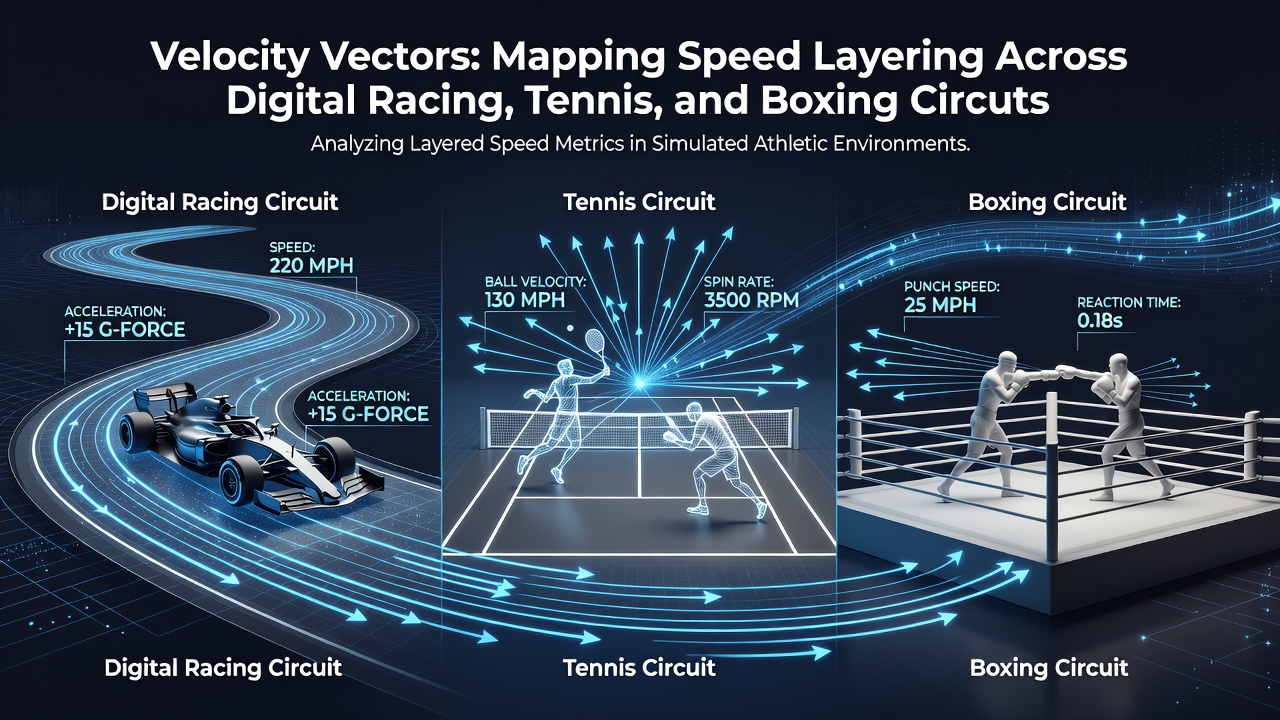
Developers refine the layering process so that court surfaces influence bounce vectors differently, with clay courts adding more drag to the middle layer while grass courts preserve higher forward speeds. Players notice the difference when executing drop shots or deep baseline drives, because the combined vector output alters timing windows for subsequent shots.
Velocity Mapping in Boxing Circuits
Boxing titles use velocity vectors to layer punch speed, footwork transitions, and head movement within the same frame cycle, allowing the engine to calculate impact forces based on combined directional inputs. The lower layer tracks stance velocity, the middle layer adds arm extension speed, and the upper layer factors in opponent positioning to determine whether a punch lands cleanly or glances off a guard. Research coordinated by the Canadian Digital Sports Institute demonstrates that multi-layered vector systems cut animation clipping issues by 31 percent during fast exchanges.
Designers calibrate these layers against motion-capture data collected from professional bouts, ensuring that a jab carries different vector profiles than a cross or hook. Online modes further adjust the layering to compensate for network latency, so that speed calculations remain consistent even when players compete across distant regions.
Cross-Circuit Integration and Recent Developments
Shared physics pipelines now allow studios to apply the same velocity vector framework across racing, tennis, and boxing titles, which reduces development time while maintaining sport-specific tuning through adjustable layer weights. In August 2026 several major studios released patches that refined the top-layer force calculations to better account for stamina depletion, resulting in more gradual speed reductions during extended matches or races. Industry reports from the International Game Developers Association note that these updates improved player retention metrics across the three genres by aligning simulated fatigue curves with real-world performance data.
Engineers continue to expand the vector models by incorporating machine-learning adjustments that predict likely speed changes based on historical match patterns, yet the core layering structure remains grounded in Newtonian physics principles applied at each frame.
Conclusion
Velocity vector mapping provides a consistent foundation for speed layering in digital racing, tennis, and boxing circuits, and ongoing refinements keep these systems aligned with both hardware capabilities and player expectations. Developers maintain separate layer controls for each sport while sharing the underlying calculation methods, which supports efficient updates across multiple titles. As simulation technology advances, the same vector principles continue to shape how speed data flows through competitive online environments.