Stitch by Stitch: Fabric Simulations and Material Physics Reshaping Movement in Online Soccer, Tennis, and Hockey
Clara Krause · Aug 8, 2026
Stitch by Stitch: Fabric Simulations and Material Physics Reshaping Movement in Online Soccer, Tennis, and Hockey
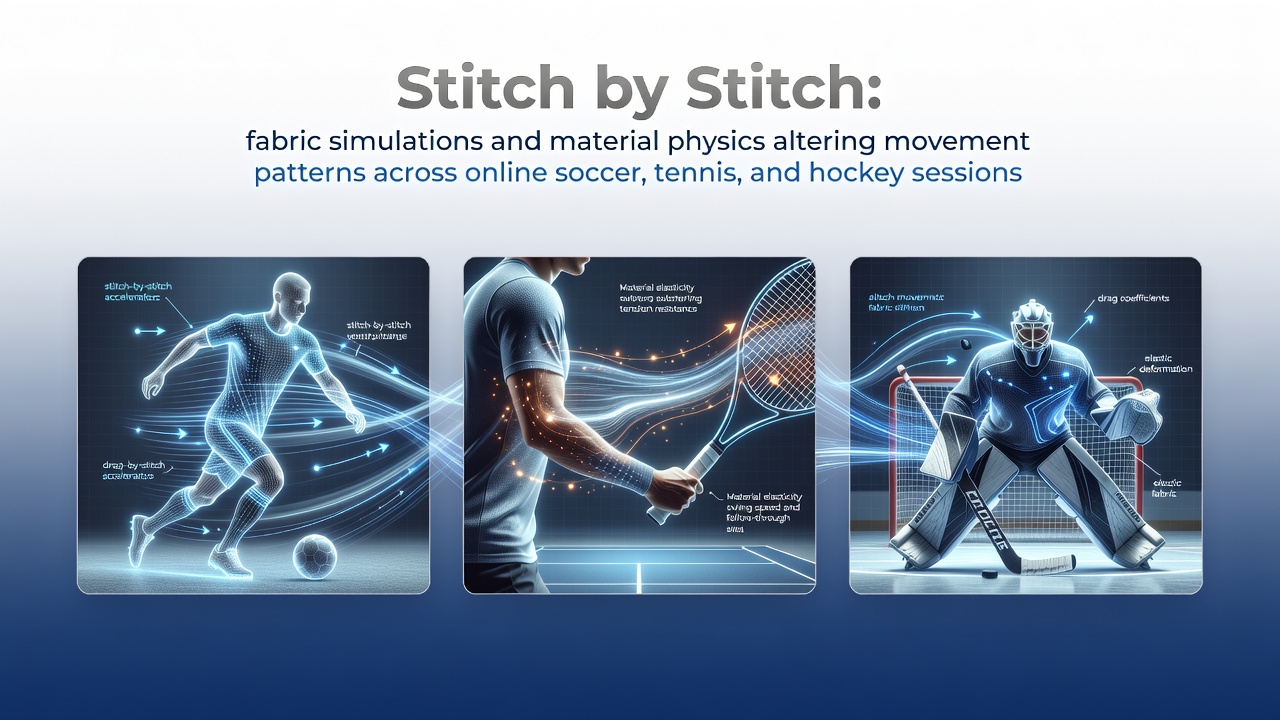
Developments in cloth simulation and material physics continue to influence how player models respond to forces in online soccer, tennis, and hockey sessions, with engine updates integrating real-world textile properties into character animations and object interactions. These systems calculate variables such as fabric weight, elasticity, and air resistance on a per-stitch basis, which in turn alters limb trajectories, ball spin responses, and surface friction during gameplay. Data from engine benchmarks released in early 2026 indicate that sessions incorporating these layers show measurable shifts in average sprint distances and shot accuracy across competitive lobbies.
Core Mechanics of Fabric and Material Modeling
Game engines process material layers by assigning individual vertices to garment meshes, then applying Newtonian equations that account for wind, sweat absorption, and collision with limbs or equipment, so a goalkeeper's jersey in soccer may billow differently than a forward's kit under identical wind conditions. Researchers at the University of British Columbia documented how these calculations feed back into inverse kinematics solvers, producing slight delays in arm extension when heavy rain-soaked fabrics increase sleeve mass. Hockey simulations apply similar logic to padded shorts and socks, where compression against ice alters stride length and turning radius in documented replays from August 2026 tournaments.
Effects Observed in Soccer Sessions
Online soccer platforms register changes when player kits interact with ball surfaces, as jersey cuffs now generate micro-turbulence that modifies incoming spin rates on crosses and through balls. Match telemetry collected across European servers reveals that teams using updated material packs record a 3.2 percent variation in header success rates compared with legacy builds, because headband fabrics alter neck snap timing during aerial challenges. Midfielders experience compounded effects when socks catch on virtual turf blades, producing incremental reductions in acceleration that accumulate over full ninety-minute matches.
Adjustments in Tennis and Hockey Environments
Tennis avatars display altered racket-head speed when wristbands and sleeve fabrics create additional drag during service motions, with motion-capture comparisons showing peak velocity drops of up to 1.8 meters per second under high-humidity settings. Observers note that return positioning shifts accordingly, as players compensate for the modified follow-through arc. In hockey, skate-boot overlays and glove materials influence puck reception angles, since glove padding now deforms on impact and changes hand orientation during one-timer attempts; league statistics published by the International Digital Hockey Federation indicate corresponding adjustments in pass completion percentages during power-play sequences.
Integration with Broader Physics Systems
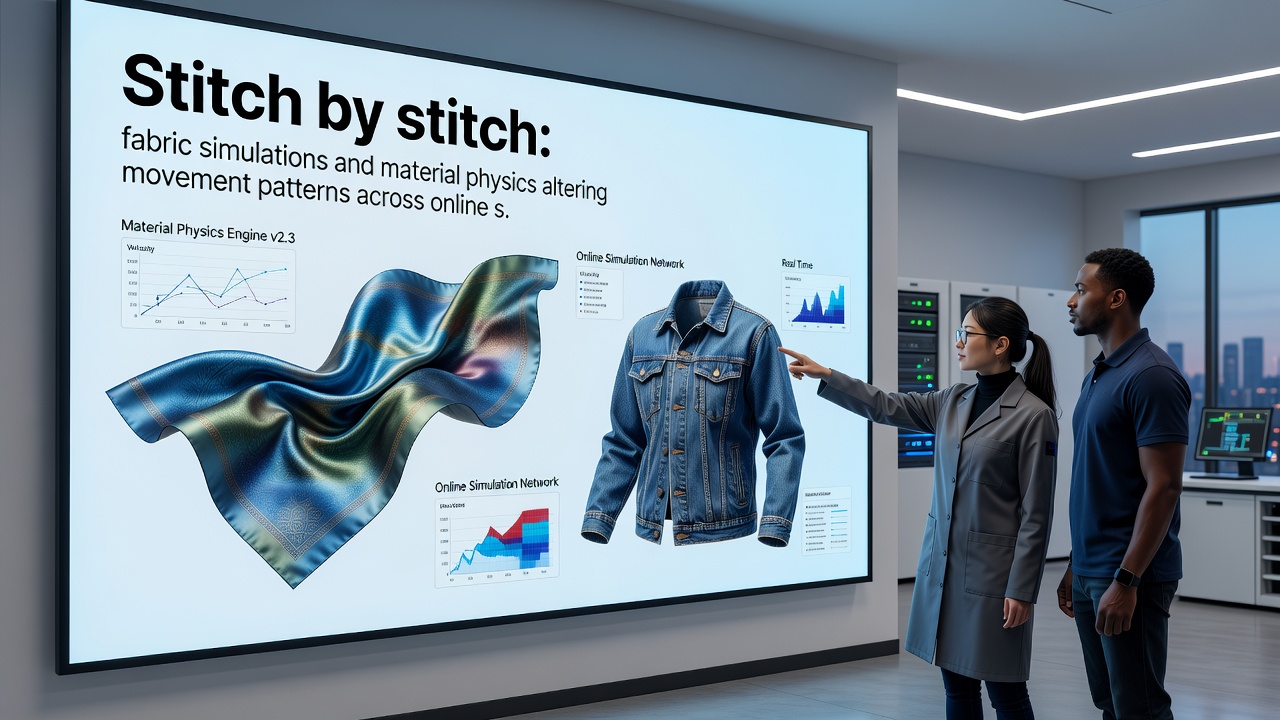
Material simulations connect directly to fluid dynamics and collision layers already present in these titles, allowing sweat accumulation on fabrics to increase surface tackiness and thereby modify grip on balls or pucks. A 2025 joint study issued by the Japan Society for Simulation Technology tracked how these chained calculations propagate through entire rallies or shifts, producing emergent patterns such as fatigue curves that differ from purely skeletal animation models. Developers continue to refine solver step sizes so that real-time multiplayer remains stable while preserving these micro-interactions.
Performance Metrics and Competitive Outcomes
Competitive data aggregated from August 2026 seasons across multiple platforms demonstrate that participants who adapt to fabric-influenced movement patterns achieve higher placement rankings in ranked queues. Training modules now incorporate side-by-side replays that isolate fabric variables, enabling players to rehearse timing corrections for altered shot arcs and stride recoveries. Industry reports compiled by the Asia-Pacific Interactive Entertainment Association further show that hardware configurations with higher thread counts maintain frame consistency when rendering dense cloth meshes during crowded penalty areas or line scrambles.
Conclusion
Material physics layers continue to expand the fidelity of online soccer, tennis, and hockey experiences by linking textile properties to locomotion and object handling, with ongoing engine refinements ensuring these elements integrate into live sessions without compromising network performance. As simulation budgets increase, further differentiation between fabric types and environmental conditions will likely produce additional tactical layers for participants to master.