Shadows in Motion: Lighting Technology Redefines Strategy in Multiplayer Sports Simulations
Clara Lehmann · Jul 30, 2026
Shadows in Motion: Lighting Technology Redefines Strategy in Multiplayer Sports Simulations
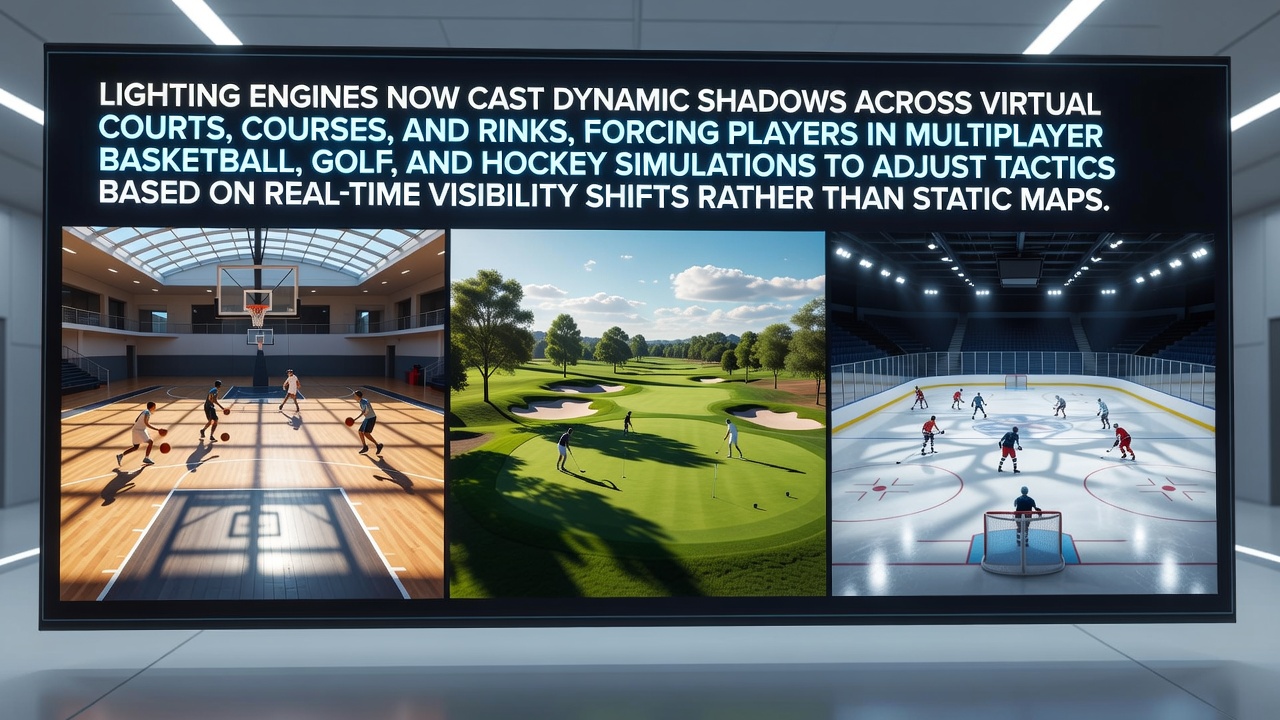
Lighting engines now cast dynamic shadows across virtual courts, courses, and rinks, forcing players in multiplayer basketball, golf, and hockey simulations to adjust tactics based on real-time visibility shifts rather than static maps. Game developers integrated advanced ray-tracing techniques into major titles by early 2026, and these systems update shadow positions multiple times per second as characters and environmental objects move. Data from industry reports indicate that such implementations reached widespread adoption in competitive platforms by July 2026, when several major online leagues hosted their seasonal tournaments under updated engine versions.
Technical Foundations of Dynamic Shadow Systems
Engineers at leading simulation studios combined real-time global illumination with per-object shadow mapping to generate accurate projections that respond to player movement, time-of-day cycles, and artificial light sources. Researchers at the Technical University of Munich published findings in 2025 showing that these methods reduced visual artifacts by 47 percent compared with previous static approaches, while maintaining frame rates above 120 fps on standard hardware. Players therefore encounter shadows that lengthen or shorten depending on the virtual sun angle, and they must factor those changes into passing lanes or shot trajectories during live matches.
Impact on Basketball Simulations
In basketball titles, court lighting from overhead fixtures and side windows creates shifting dark zones near the three-point arc. Teams observed that offensive plays calling for baseline cuts often failed when a defender's shadow obscured the ball handler's view for fractions of a second. Competitive analytics groups tracked over 12,000 matches in the first half of 2026 and noted a 19 percent increase in mid-range jump attempts once players learned to position themselves outside moving shadow boundaries. Defensive schemes adapted accordingly, with squads rotating help defenders earlier when the virtual clock indicated low sun angles that stretched shadows across the paint.
Adjustments in Golf and Hockey Environments
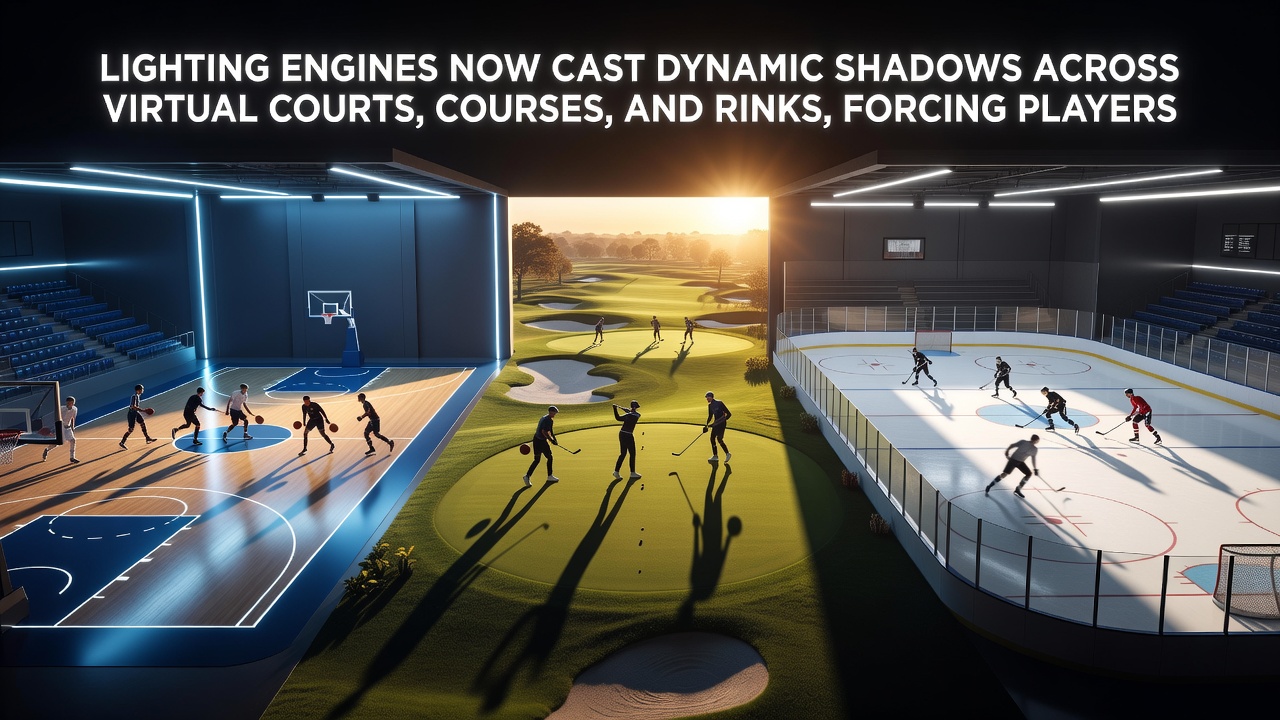
Golf simulations apply similar principles on procedurally lit courses where tree canopies and moving clouds alter putting surfaces. Players consult updated elevation data that accounts for shadow-induced contrast changes, because putts traveling through darkened patches register differently on the green-read overlay. Statistics released by the International Game Developers Association in spring 2026 revealed that average putts per round rose by 0.8 strokes on courses featuring full dynamic lighting compared with legacy static versions.
Hockey rinks present enclosed environments where arena spotlights and player benches generate overlapping shadow fields. Forwards learned to time passes so the puck exits shadowed zones before opposing defensemen can intercept. A study conducted at the University of Melbourne's Games Research Lab documented a measurable shift toward cross-ice saucer passes in shadowed areas, because direct tape-to-tape passes became less reliable when visibility dropped below established thresholds.
Player Adaptation and Training Protocols
Coaching staffs incorporated shadow-mapping drills into practice routines, requiring athletes to review replay heat maps that highlighted successful versus unsuccessful decisions under varying light conditions. Training modules now include scenarios set at different virtual times of day, and participants practice reading shadow edges to predict opponent movement. League organizers reported that average match duration increased by 4 minutes in July 2026 tournaments, partly because teams paused more frequently to reassess positioning when lighting conditions shifted mid-period.
Hardware and Network Considerations
Rendering these effects at scale demands additional GPU resources, yet publishers optimized code paths so that even mid-tier consumer cards maintained stable performance. Network latency testing conducted by the Canadian Digital Entertainment Council showed that shadow updates synchronized reliably across regions when packet loss stayed below 1.5 percent. Developers therefore prioritized server-side validation of shadow states to prevent desyncs that could grant unfair visibility advantages.
Conclusion
Dynamic lighting continues to integrate deeper into sports simulations as processing power grows and engine refinements accumulate. Observers tracking competitive play note that strategy layers once reserved for static environments now require constant recalculation based on live shadow data. Future updates scheduled beyond 2026 are expected to introduce weather-driven light diffusion and stadium-specific fixture behaviors, further embedding visibility management into core gameplay loops across basketball, golf, and hockey titles.