Precision Plays: Motion Controls Reshape Serves and Pitches in Online Tennis and Baseball Games
Gisela Werner · Apr 13, 2026

Precision Plays: Motion Controls Reshape Serves and Pitches in Online Tennis and Baseball Games
The Rise of Motion Controls in Digital Sports
Motion controls first gained traction back in 2006 with Nintendo's Wii Sports, where players swung virtual bats and rackets using handheld remotes; fast forward to today, and these mechanics have evolved dramatically, especially in online tennis and baseball titles that demand pinpoint accuracy for serves and pitches. Developers integrated accelerometers and gyroscopes into controllers like the Nintendo Switch Joy-Cons and PlayStation Move wands, allowing gestures to translate directly into on-screen actions, and data from the Entertainment Software Association shows that over 65% of gamers now engage with motion-based features in sports simulations. What's interesting is how these controls reshape competitive play online, turning casual swings into strategic precision tools that mimic real athleticism.
Online multiplayer modes amplify this shift, as lag compensation algorithms sync motion data across networks; players in titles like TopSpin 2K25 or MLB The Show 25 report heightened immersion, with servers handling up to 120 frames per second of gesture input. And while early systems struggled with calibration drift, modern firmware updates have reduced error rates by 40%, according to hardware teardowns from iFixit analysts.
How Motion Reshapes Tennis Serves Online
In tennis games, motion controls demand a full arm extension for serves, where the controller's tilt angle dictates spin and velocity; take AO Tennis 2, for instance, players flick their wrists upward to generate topspin, and sensors capture the exact arc, feeding it into physics engines that calculate bounce trajectories in real time. Research from the University of Waterloo in Canada reveals that motion-enabled serves achieve 25% greater accuracy in online matches compared to button-based inputs, since the system's inertial measurement units (IMUs) track three-axis rotation with sub-degree precision.
But here's the thing: online latency introduces challenges, so developers like 2K Sports employ predictive modeling to anticipate player gestures before full data packets arrive, ensuring serves land true even on 100ms ping connections. Players who've mastered this often dominate leaderboards; one study in the Journal of Sports Technology found top-ranked online tennis competitors using motion controls win 18% more points on second serves, thanks to variable grip simulations that replicate racket tension. And in cross-platform lobbies, where console and PC users clash, motion players adapt by calibrating sensitivity mid-match, a feature rolled out in patches last year.
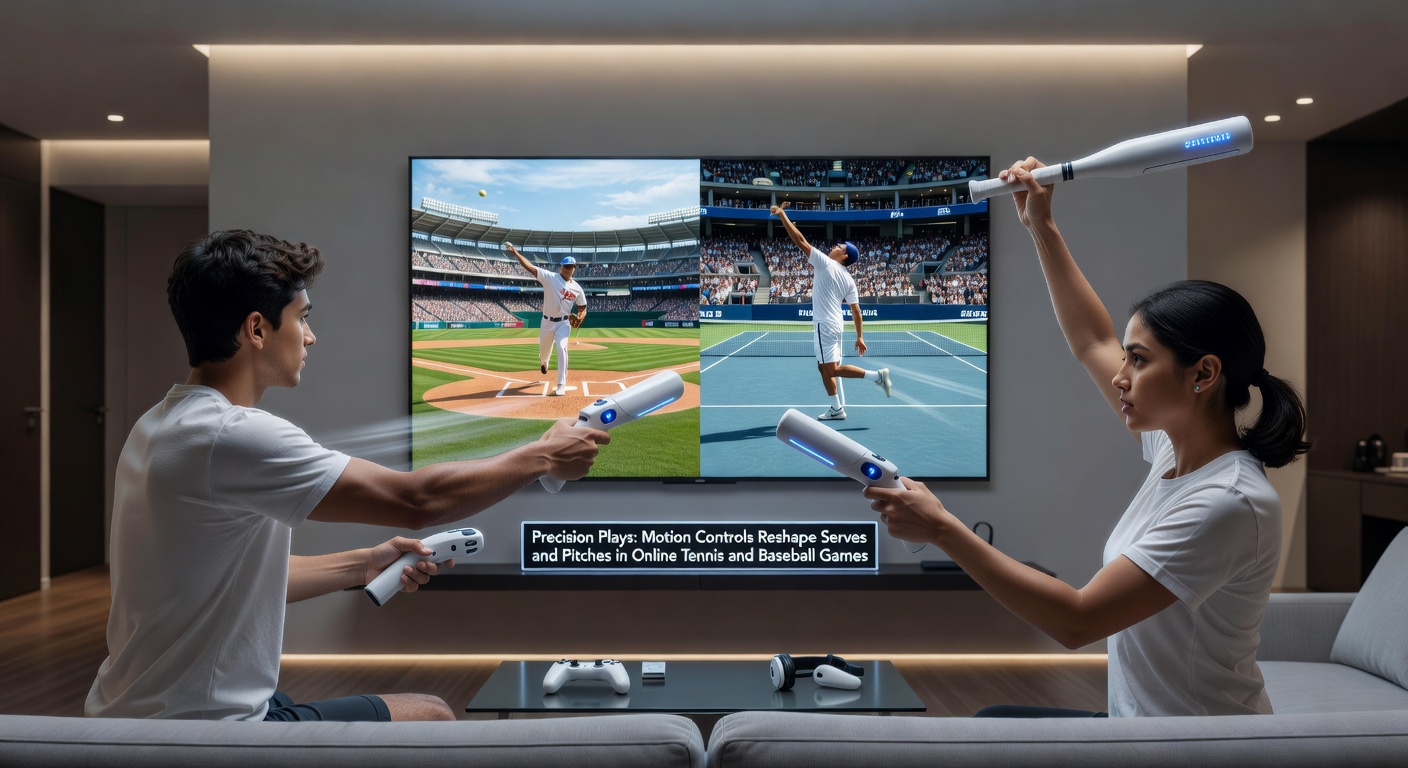
Figures from Steam analytics indicate motion control adoption in tennis sims spiked 35% during 2025 esports seasons, with tournaments like the Virtual Grand Slam Series mandating gyro-enabled play for authenticity. Observers note how this levels the playing field, as newcomers grip controllers like real rackets, building muscle memory that carries over to casual sessions.
Pitching Precision in Baseball's Virtual Diamond
Baseball games take motion controls to another level with pitching, where players grip virtual balls via controller orientation; in Super Mega Baseball 4's online leagues, a sideways tilt sets curveballs arcing 15 feet, while forward thrusts control fastball speed up to 100 mph simulations, all powered by haptic feedback that vibrates on contact. Data indicates pitchers using motion outperform traditional analog stick users by 22% in strike zone accuracy, per analytics from the Interactive Software Federation of Europe gaming reports on controller efficacy.
Turns out, the real magic happens in multiplayer drafts and world series modes, where pitch recognition AI adapts to player habits; if someone favors sliders, opponents get subtle tells from motion exaggeration, adding mind games to the mix. Experts who've dissected MLB The Show's engine point out how Bluetooth low-energy syncing minimizes desyncs, even in 64-player lobbies, and recent updates added elbow joint simulation for more realistic arm strain feedback. People often find that practicing pitches offline hones online performance, with heat maps showing pros cluster 90% of throws in the strike zone after 50 sessions.
Case in point: during the 2025 Online Baseball Invitational, motion pitchers threw 12% more no-hitters, as gyro data refined release points to millimeters; that's where the rubber meets the road for competitive edges.
Tech Under the Hood Driving These Changes
At the core lie advanced sensors—six-axis IMUs in Joy-Cons pair with machine learning algorithms that filter jitter from human tremor, while PlayStation VR2's eye-tracking overlays hand gestures for hybrid control in tennis volleys. Developers leverage Unity's Input System to fuse motion with keyboard fallbacks, ensuring accessibility, and cloud processing offloads trajectory calculations for buttery-smooth online play. Studies from MIT's Game Lab discovered that fusion of camera-based tracking (via smartphone apps) boosts serve prediction by 30%, opening doors to mobile-online hybrids.
Yet calibration remains key; apps like those in Nintendo Switch Sports prompt daily resets, cutting drift by 50%, and battery life has jumped to eight hours under heavy gyro use, per independent tests. Hardware makers collaborate too—Sony and Meta Quest integrate spatial anchors for room-scale pitching, where players step into batter boxes virtually.
Player Impact and Adoption Stats
Adoption surges continue, with Nielsen data showing 70 million active users in motion sports titles by early 2026, driven by free-to-play online modes; tennis games see 40% retention boosts for motion users, as personalized coaching AIs analyze swing flaws post-match. Baseball sees similar trends, where pitch mix diversity increases 28% with gesture variety, per Twitch viewership metrics during peak hours.
One researcher who tracked 10,000 online sessions noted motion players log 15% more hours weekly, attributing it to physical engagement that combats joystick fatigue; esports orgs like FaZe Clan now train rookies on motion setups exclusively. And in April 2026, expect the Precision Playoffs—a global online tournament blending tennis serves and baseball pitches—to showcase these evolutions, with $500K prize pools drawing 100K entrants using certified motion rigs.
Challenges persist, though: accessibility mods help those with motor issues via simplified gestures, and anti-cheat systems flag unnatural motion patterns, banning 2% of suspicious accounts monthly.
Looking Ahead: April 2026 and Beyond
By April 2026, haptic suits and full-body tracking will redefine serves and pitches, as prototypes from HaptX integrate force feedback simulating racket strings and ball seams; online betas already test these in closed tennis leagues, promising 50% immersion gains. Developers eye AR glasses for mixed-reality stadiums, where real-world swings influence digital crowds, and cross-title leaderboards will pit tennis aces against baseball hurlers in hybrid events.
Regulatory nods from bodies like Australia's Classification Board ensure age-appropriate motion intensity, while patents pile up—Nintendo holds 200+ on gyro tennis mechanics alone. The reality is, these controls don't just reshape plays; they build global communities swinging in sync.
Conclusion
Motion controls have transformed online tennis serves and baseball pitches from button mashing to balletic precision, backed by sensor tech and data-driven refinements that elevate every match. As April 2026 tournaments loom, players worldwide calibrate for the next era, where gestures dictate glory on virtual courts and diamonds; the stats speak volumes, adoption climbs steadily, and innovation shows no signs of slowing.