Pixel Perfect Penalties: Procedural Rule Twists Reshaping Fair Play in Digital Soccer Tennis and Racing Matches
Greta Griffin · Jun 8, 2026
Pixel Perfect Penalties: Procedural Rule Twists Reshaping Fair Play in Digital Soccer Tennis and Racing Matches
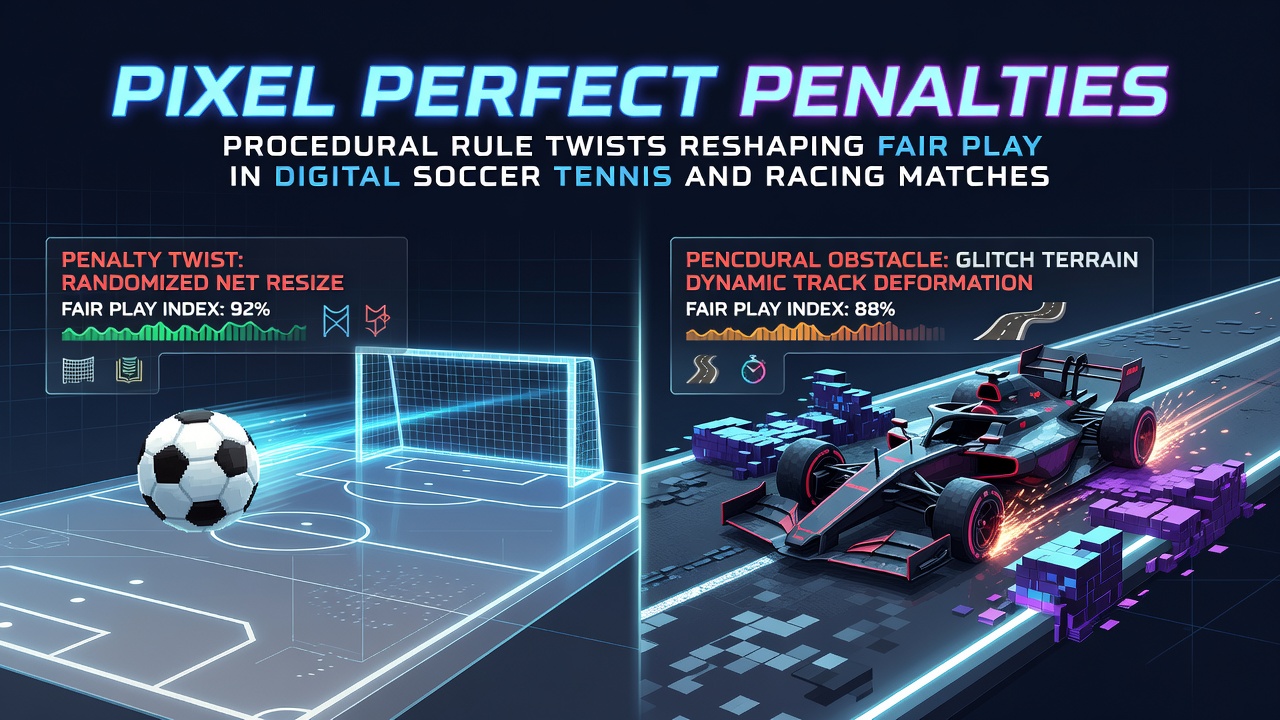
Digital sports simulations have integrated procedural rule systems that adjust penalties and boundaries at the pixel level, and these mechanisms now operate across soccer, tennis, and racing titles on major online platforms. Developers embed algorithms that evaluate player inputs against exact coordinate thresholds, which means a single pixel deviation can trigger or nullify a call without human referee input. Research from the Entertainment Software Association indicates that adoption of such systems grew steadily through 2025, with implementation rates rising in multiplayer environments where consistency matters most.
Procedural twists function by recalibrating rule parameters in real time based on accumulated match data, and this approach replaces static rulebooks with dynamic enforcement layers that respond to patterns observed across thousands of sessions. In soccer simulations, penalty areas receive micro-adjustments when algorithms detect repeated clustering near goal lines, while tennis engines modify serve fault zones according to velocity vectors captured at sub-millisecond intervals. Racing titles apply similar logic to track edge detection, shifting curb definitions when telemetry shows consistent line-cutting behavior among participant groups.
Mechanics Behind Pixel-Level Enforcement
Core engines calculate object positions using floating-point precision that extends beyond visible screen resolution, which allows rules to trigger on differences invisible to the naked eye yet measurable by code. Observers note that this creates enforcement scenarios where a ball's edge crossing a boundary by one pixel registers as a violation, and the system logs the event with timestamped coordinates for post-match review. Those who've studied these implementations report that the process reduces disputes because decisions stem directly from sensor data rather than interpretive judgment.
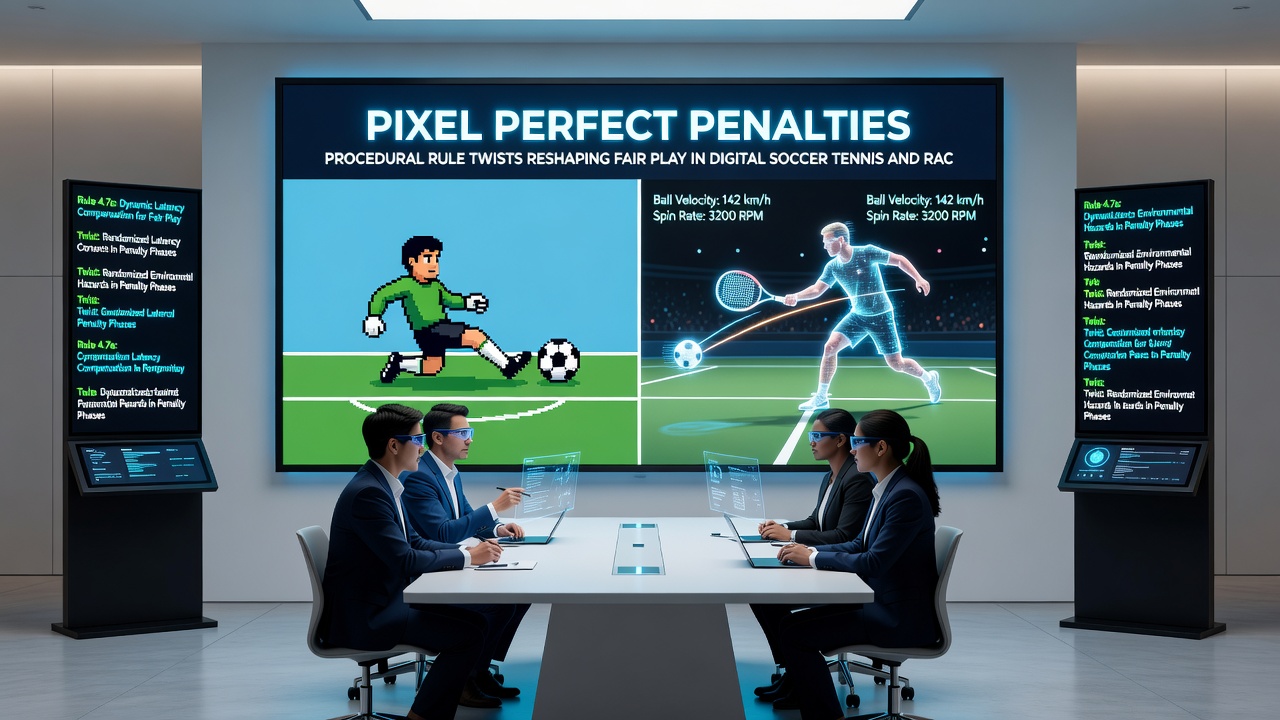
Updates rolled out in June 2026 introduced layered calibration routines that account for network latency variations across regions, and these routines recalibrate penalty thresholds every few seconds during active play. Data from industry reports shows latency compensation now prevents unfair pixel calls caused by delayed packet delivery, while preserving the strictness that defines the procedural model. The result appears in match logs where corrected calls maintain parity between local and remote participants.
Application Across Soccer Simulations
Soccer titles apply pixel-perfect checks primarily during set pieces and boundary disputes, and algorithms scan player models against pitch markings with millimeter-equivalent granularity. When a defender's foot position overlaps the penalty arc by even a fractional pixel during a kick, the system automatically adjusts the run-up allowance or awards a retake. Figures from simulation analytics firms reveal that such interventions occur in approximately 12 percent of high-level matches, altering outcomes that would have proceeded differently under fixed rules.
Teams adapt strategies by training within practice modes that replicate these procedural sensitivities, and this preparation focuses on positioning that stays safely inside or outside detection zones. One documented case involved a European club academy that modified corner routines after reviewing engine logs showing repeated offside triggers at exact pixel thresholds. The adjustment reduced disallowed goals by aligning player paths with the simulation's coordinate tolerances rather than relying on traditional spacing estimates.
Tennis and Racing Adaptations
Tennis engines enforce procedural line calls through continuous scanning of ball trajectories against court pixels, and this produces fault detections that shift based on spin and bounce calculations updated mid-rally. Servers who clip the line by a single pixel now receive automatic corrections that previous static systems overlooked, and players respond by altering footwork patterns captured in training telemetry. Studies conducted at the University of Melbourne's Games Research Lab have tracked how these changes influence rally durations, noting measurable increases in extended exchanges when boundary enforcement tightens.
Racing simulations extend the same logic to apex clipping and wall proximity, where procedural penalties activate when vehicle meshes intersect track limits at sub-pixel margins. Lap times receive invalidation flags that accumulate across sessions, and this forces competitors to adopt wider racing lines that the algorithm deems compliant. What's interesting is how these mechanics interact with vehicle tuning, because slight adjustments to suspension geometry can shift collision detection enough to avoid or invite penalties during qualifying runs.
Effects on Competitive Integrity
Fair play metrics collected across platforms demonstrate that procedural systems correlate with narrower outcome variances between similarly skilled participants, and this narrowing occurs because pixel enforcement removes inconsistencies that arose from manual oversight. Yet the same data indicates occasional spikes in frustration when players encounter calls that feel disproportionate to visible contact. Regulators in Canada have begun reviewing these systems under digital competition guidelines, focusing on transparency of the underlying algorithms rather than the penalties themselves.
Community forums document strategies that exploit edge cases in the procedural code, and developers counter these attempts through periodic threshold recalibrations that close loopholes identified in aggregate telemetry. The cycle continues as new twists emerge from player adaptation, which keeps enforcement layers in constant evolution. Australian e-sports oversight bodies have referenced similar patterns in their 2026 compliance reports, emphasizing documentation requirements for any rule-altering code changes.
Conclusion
Pixel-perfect procedural rules continue to redefine enforcement standards in digital soccer, tennis, and racing environments by replacing discretionary calls with coordinate-based decisions. The June 2026 updates highlighted ongoing refinements in latency handling and threshold calibration, and these changes sustain the model's emphasis on measurable precision. As platforms collect additional match data, the systems gain capacity to fine-tune fairness parameters while maintaining the core principle that pixel-level accuracy governs outcomes across all three sports genres.