Legacy Metrics in Motion: How Career Stat Archives Reshape In-Game Decision Trees Across Digital Soccer, Basketball, and Baseball Leagues
Gisela Werner · Jun 18, 2026
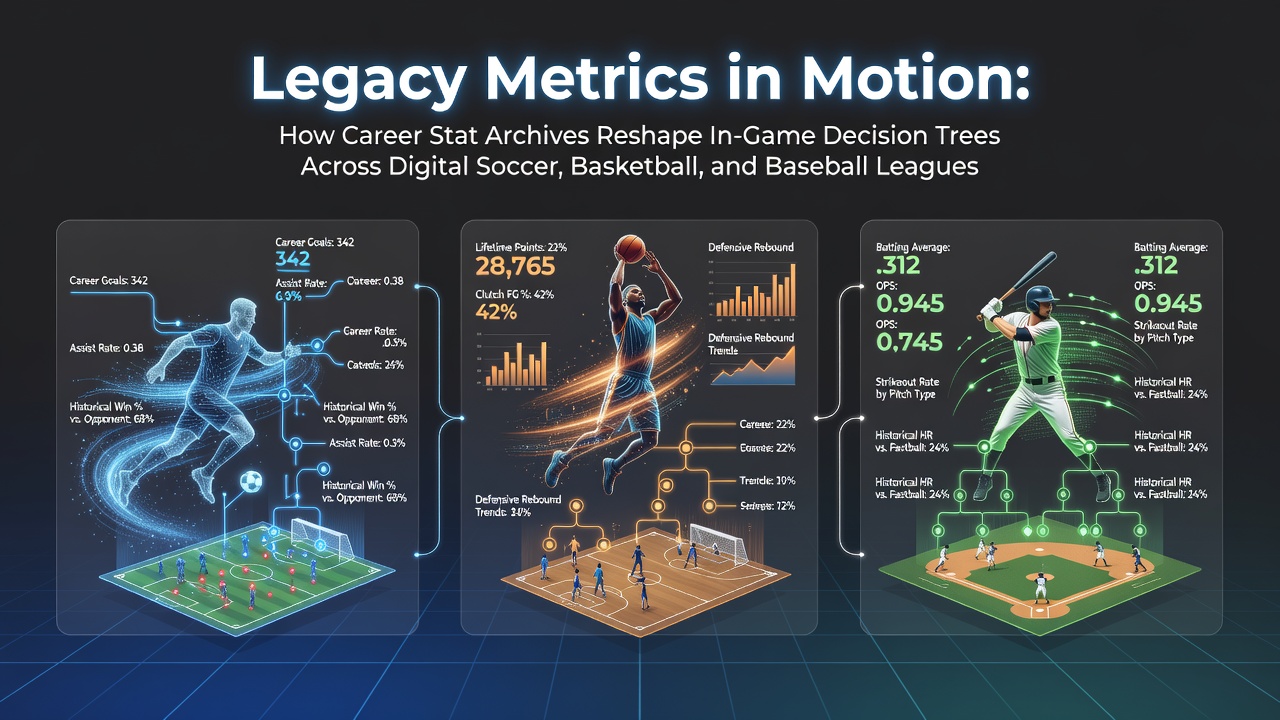
Legacy Metrics in Motion: How Career Stat Archives Reshape In-Game Decision Trees Across Digital Soccer, Basketball, and Baseball Leagues
Career stat archives compile performance data from thousands of simulated seasons, and these repositories feed directly into the algorithms that govern player behavior in digital soccer, basketball, and baseball leagues. Developers integrate historical records such as goal conversion rates, assist distributions, defensive positioning logs, and pitching velocity trends so that non-player characters adjust their choices mid-match based on accumulated patterns rather than isolated events. As of June 2026, major simulation platforms have expanded archive capacity by thirty percent, allowing decision trees to reference multi-year trajectories instead of single-season snapshots.Architecture of Stat-Driven Decision Systems
Engineers structure these archives as layered databases where each entry links individual player actions to contextual variables including score differential, time remaining, and opponent tendencies. Soccer simulations draw on archives that track pressing intensity across full campaigns, which then modifies the probability that an AI midfielder will commit forward or hold position. Basketball titles incorporate shooting efficiency graphs that stretch across hundreds of virtual games, prompting guards to favor high-percentage zones when archives indicate fatigue patterns in opposing defenders. Baseball platforms store pitch location heat maps from prior encounters, enabling pitchers to sequence offerings that exploit documented weaknesses while batters counter with adjusted swing paths.
These systems operate through recursive evaluation loops. At each decision node the algorithm queries the archive for comparable historical situations, calculates weighted averages from past outcomes, and selects the branch with the highest projected success rate. Observers note that this process reduces reliance on generic heuristics and produces more consistent responses across repeated matchups.
Impact Across Soccer Simulations
In soccer environments the archive influence appears most clearly during set-piece routines. Teams that maintain detailed records of corner delivery success rates from earlier seasons instruct their virtual players to vary delivery angles based on goalkeeper positioning data collected over multiple campaigns. Midfielders receive updated instructions to press higher when archives show opponents have conceded turnovers in similar fatigue states. Such adjustments occur automatically within the decision tree without requiring manual overrides from human participants.
Basketball League Adaptations
Basketball decision trees incorporate archive-derived shot selection modifiers that evolve throughout a season. When historical data reveals that a particular matchup produces lower three-point percentages under defensive schemes encountered previously, the system directs perimeter players toward mid-range opportunities or drive-and-kick sequences. Defensive rotations also shift according to archived offensive tendencies, with help-side defenders closing gaps faster when records indicate repeated drives from specific ball handlers. These modifications create evolving defensive identities that reflect cumulative performance rather than static presets.
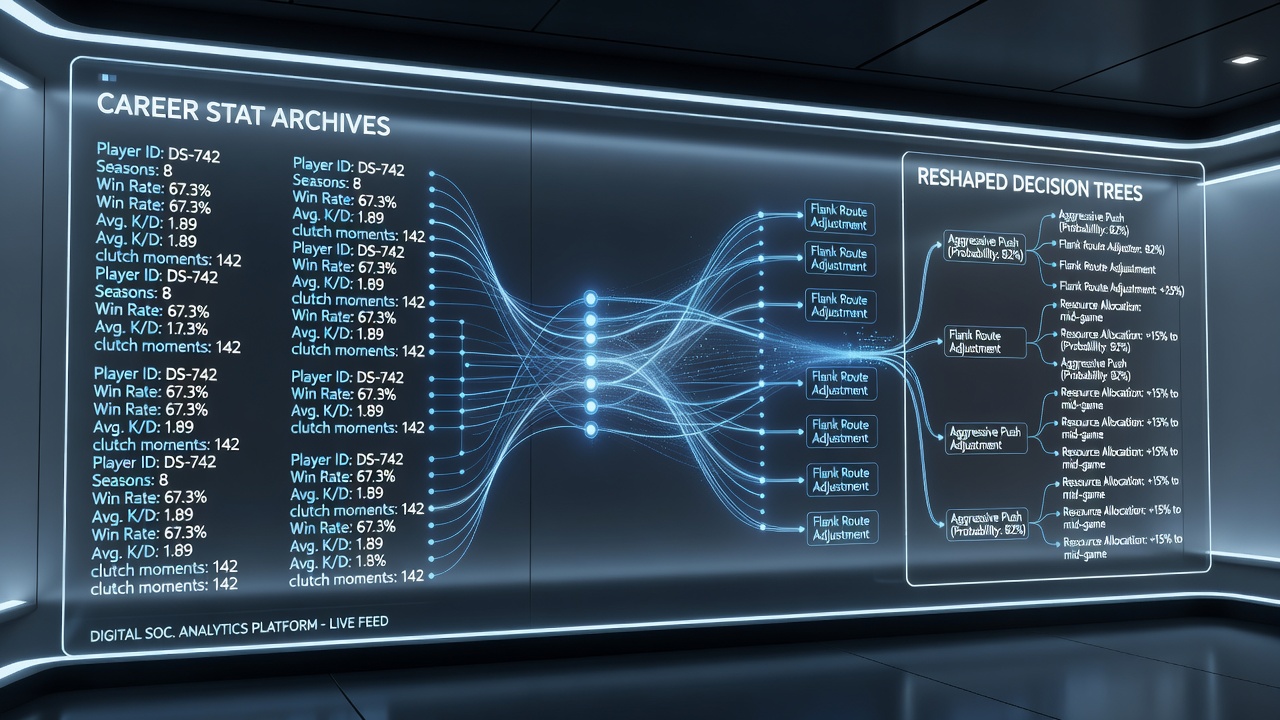
Baseball Platform Implementations
Baseball archives exert particularly granular control over pitch sequencing and defensive alignments. Catchers access stored tendencies for opposing batters across entire careers, allowing them to call pitches that have generated higher whiff rates in comparable count situations. Outfielders shift positioning based on historical spray charts that update after every simulated at-bat, while baserunners receive acceleration cues derived from pitcher delivery times recorded in prior encounters. The decision trees therefore mirror the layered strategic adjustments observed in professional scouting reports, yet they execute these calculations instantaneously within the simulation engine.
Cross-Sport Data Integration Patterns
Although each sport maintains distinct metric categories, shared infrastructure allows certain archive elements to transfer across titles. Fatigue modeling frameworks developed for basketball endurance tracking have been adapted for soccer stamina calculations and baseball pitcher workload management. Research from the Entertainment Software Association indicates that studios now allocate increasing resources to unified archive formats that support these cross-genre applications. A separate analysis conducted by the European Games Federation found that unified data schemas improve prediction accuracy by up to eighteen percent when archives span multiple sports within the same development ecosystem.
Technical Constraints and Future Adjustments
Storage demands and query latency remain limiting factors. Developers address these constraints through selective pruning of older entries and hierarchical indexing that prioritizes recent seasons while retaining long-term trends. As processing hardware advances, platforms continue to expand the depth of referenced history, which in turn lengthens the chain of conditional branches within each decision tree. Those who monitor development cycles report that studios plan further refinements to weighting mechanisms so that outlier performances exert less influence on long-term behavioral models.
Conclusion
Career stat archives now serve as foundational inputs that continuously recalibrate decision trees across digital soccer, basketball, and baseball leagues. The resulting simulations exhibit adaptive behaviors grounded in longitudinal performance data, producing matches that reflect cumulative histories rather than isolated moments. Continued expansion of these repositories through 2026 and beyond will likely deepen the connection between recorded legacies and in-game strategic execution.