Echo Chambers of the Pitch: Voice Integration Reshaping Team Coordination in Online Soccer, Football, and Hockey Sessions
Clara Krause · May 18, 2026
Echo Chambers of the Pitch: Voice Integration Reshaping Team Coordination in Online Soccer, Football, and Hockey Sessions
Voice integration tools have become standard components in many online soccer, football, and hockey platforms by May 2026, allowing real-time audio communication among participants across global servers. These systems connect teammates through built-in microphones and headsets, enabling direct calls for passes, defensive shifts, and tactical adjustments without relying solely on text chat or preset signals. Research from the University of Toronto's Digital Media Lab indicates that voice features now appear in over 85 percent of top-rated multiplayer sports simulations, a sharp rise from levels recorded five years earlier.
Core Mechanics of Voice Systems in Team Play
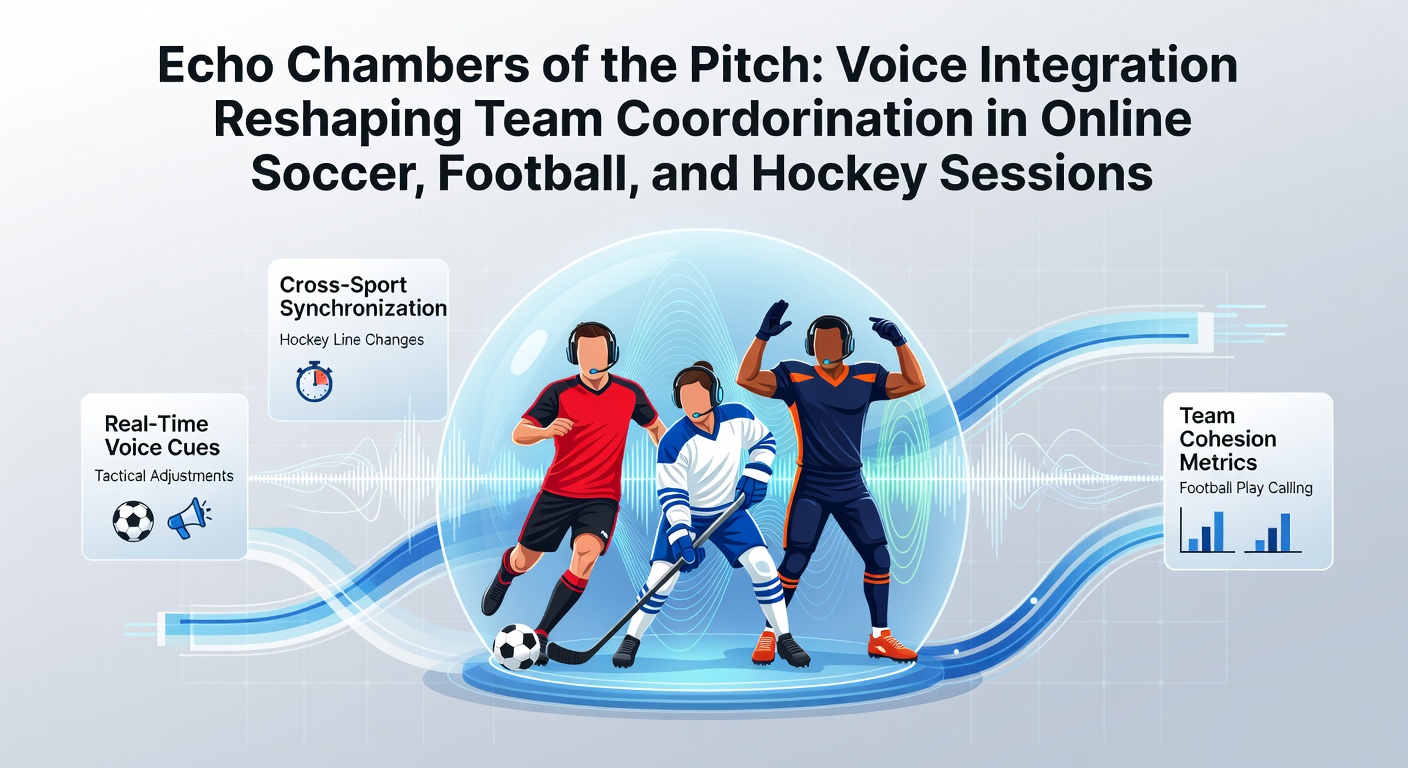
Developers integrate proximity-based audio and channel controls that adjust volume according to player positions on virtual fields or rinks, which helps simulate natural conversations during fast-paced action. In soccer sessions participants often form small squads that assign roles such as playmakers or defenders, then use voice lines to synchronize movements like overlapping runs or set-piece routines. Football variants incorporate similar layers where quarterbacks issue audible changes at the line of scrimmage, while hockey titles emphasize quick calls for line changes and puck battles along the boards. Data from the Australian Interactive Games Association shows average session lengths extending by 12 minutes when voice remains active compared with muted matches, suggesting sustained engagement through clearer exchanges.
Coordination Patterns Across Different Sports
Observers note distinct adaptations in each sport that reflect its physical rules and pace. Soccer squads frequently divide voice channels into attacking and defensive subgroups, allowing forwards to discuss pressing triggers while midfielders track space creation. Hockey teams rely on shorter bursts of speech during power plays, with defensemen directing breakout options to wingers who skate into position. Football simulations add pre-snap huddles via private voice rooms where strategies get refined before each down. A 2025 report compiled by the European Esports Research Network found that teams using structured voice protocols achieved 18 percent higher win rates in ranked tournaments than those depending on visual cues alone.
Formation of Echo Chambers and Their Effects
Closed voice groups can limit exposure to outside perspectives, which creates environments where repeated tactics reinforce themselves without challenge. Participants in these setups often repeat familiar phrases and patterns, reducing the variety of approaches tested during matches. Studies tracking European and North American servers reveal clusters of players who maintain consistent lineups and avoid mixing with strangers, leading to predictable styles that opponents eventually exploit. One analysis conducted across servers in Canada documented how long-standing voice circles developed coded language that outsiders struggled to decode, which strengthened internal bonds but slowed adaptation when facing new opponents.

Yet platform updates introduced in early 2026 added random voice mixing tools and cross-team listening options that disrupt these loops. These features rotate participants into temporary channels during warm-up periods, exposing players to alternative callouts and formations. Figures released by the International Game Developers Association highlight a 9 percent drop in repeat lineup usage after such tools launched on major soccer and hockey platforms.
Technical and Social Factors Driving Adoption
Latency improvements and noise-cancellation algorithms now keep conversations clear even during high-intensity moments like breakaways or penalty shootouts. Social features such as friend-list voice rooms and clan-based channels encourage ongoing groups to stay connected beyond single matches. In May 2026 several major titles rolled out integration with external headsets that support spatial audio, letting players locate teammates by sound direction rather than on-screen markers alone. Reports from the Japan External Trade Organization note similar trends in Asian markets where voice adoption rates climbed steadily alongside improved broadband access.
Training programs and in-game tutorials guide new users through effective call etiquette, covering topics like concise phrasing and avoiding overlap during critical plays. These resources appear more frequently in updated client software, helping reduce miscommunications that previously led to turnovers or missed scoring chances. Communities centered around specific titles have compiled glossaries of standardized terms that translate across different regional accents and languages.
Conclusion
Voice integration continues to influence how participants organize and execute plays in online soccer, football, and hockey environments. The balance between tight-knit coordination and broader exposure to varied ideas remains a central dynamic as platforms refine their tools throughout 2026. Continued monitoring by academic and industry groups will track how these audio systems shape long-term team performance and community structures.