Code-Crafted Officiating: AI Judgment Systems Reshaping Strategic Priorities in Multiplayer Basketball, Soccer, and Hockey
Clara Krause · Jun 13, 2026
Code-Crafted Officiating: AI Judgment Systems Reshaping Strategic Priorities in Multiplayer Basketball, Soccer, and Hockey
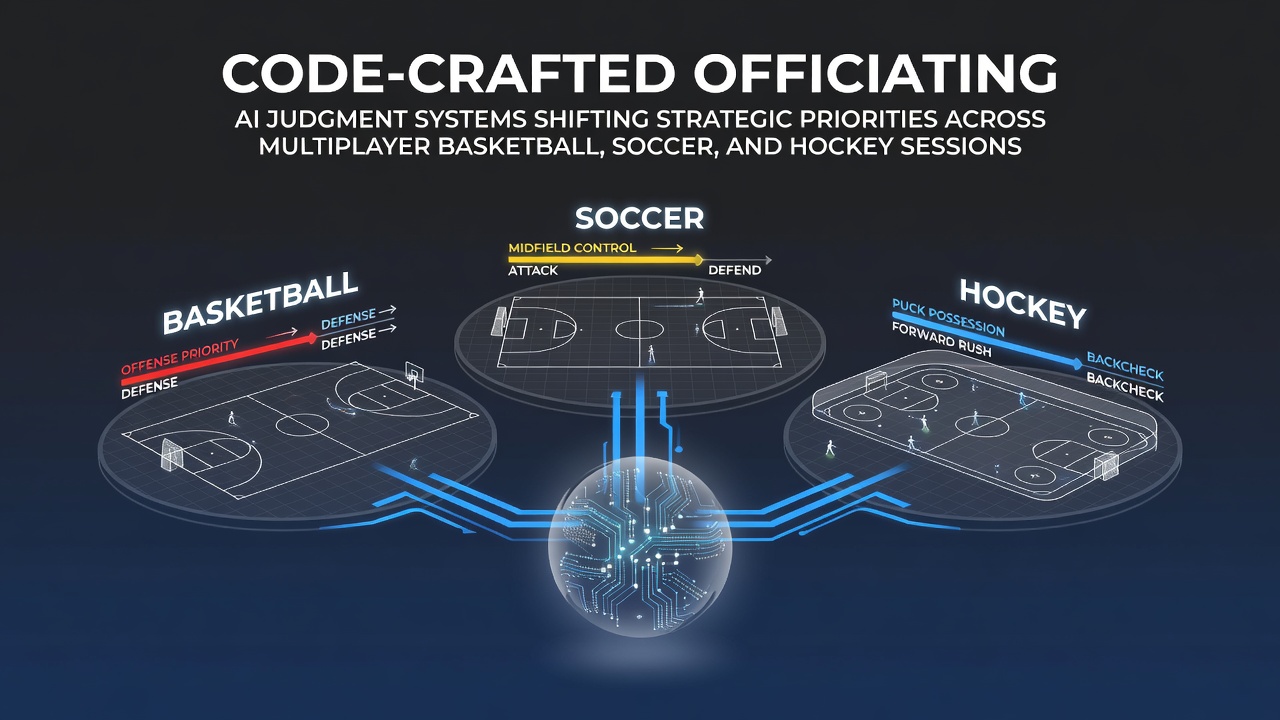
Artificial intelligence now handles real-time rule enforcement in many multiplayer basketball, soccer, and hockey sessions, and this shift has prompted teams to adjust formations, timing, and risk thresholds because automated calls leave less room for human interpretation. Developers integrated these systems into game engines starting in late 2024, and by June 2026 several major titles had rolled out updated models that process player trajectories, contact points, and offside lines within milliseconds.
Mechanics of AI Officiating Across the Three Sports
Basketball simulations rely on skeletal tracking to detect traveling violations and illegal screens, while soccer titles use volumetric data to confirm handball contact and hockey games apply similar technology to measure high-stick infractions. Each sport feeds the same core algorithms with sport-specific parameters, yet the strategic ripple effects differ because the rule sets and field dimensions create distinct pressure points. Observers note that players who once exploited marginal contact now receive automatic flags, which forces squads to recalibrate spacing and passing lanes before each possession.
Research from the University of Waterloo indicates that AI accuracy on boundary calls reached 98.7 percent in controlled test environments during 2025, and this reliability encouraged developers to expand the scope of automated decisions into subjective areas such as charging versus blocking in basketball. Soccer titles followed suit by tightening the definition of deliberate handball, and hockey engines began flagging subtle stick lifts that previously escaped notice.
Strategic Adjustments in Basketball Sessions
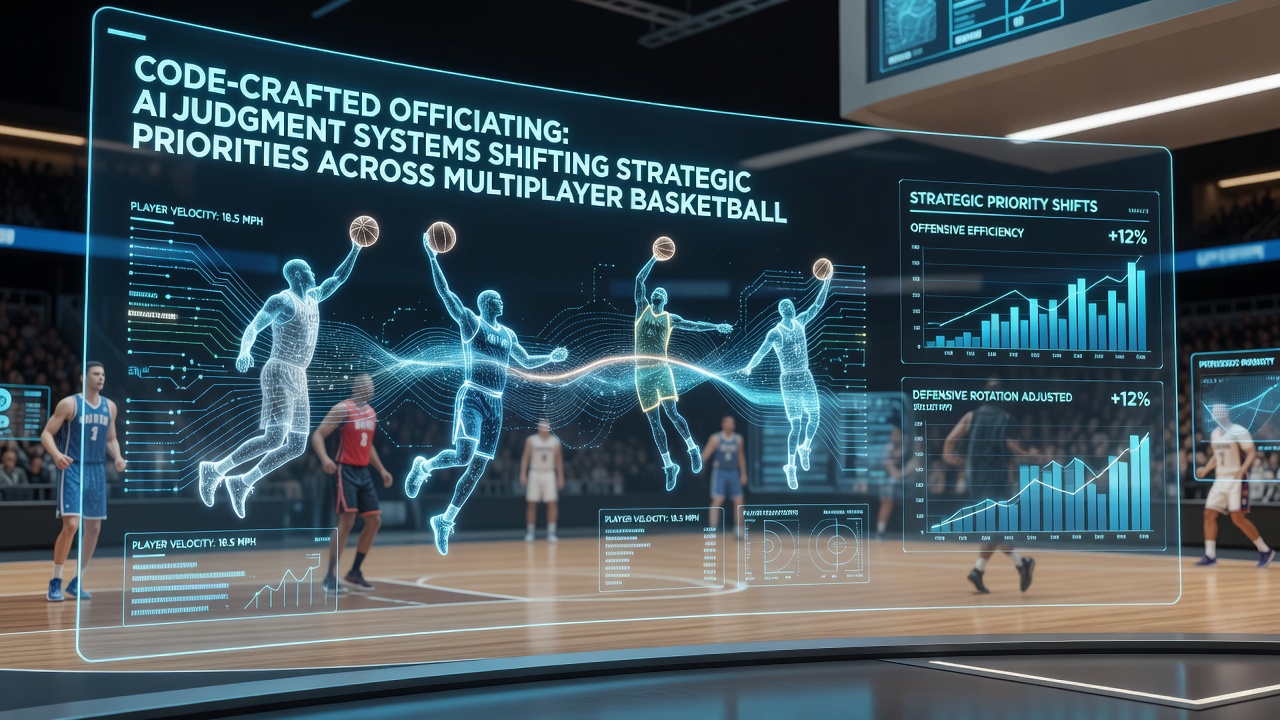
Teams in basketball lobbies have shortened their defensive rotations because the system instantly registers when a defender slides his feet after establishing position. Point guards now favor quicker releases on jump shots to avoid traveling flags that trigger during prolonged dribble moves, and big men have reduced drop-step attempts near the basket since the AI measures pivot-foot violations more consistently than earlier versions. Data compiled by the Entertainment Software Association shows a 14 percent drop in post-up attempts across ranked playlists between January and June 2026.
Changes in Soccer and Hockey Dynamics
Soccer formations have trended toward wider attacking shapes because the AI now flags shoulder-to-shoulder contact when a player leans into a defender inside the penalty area. Midfielders consequently prioritize through balls over hold-up play, and fullbacks have increased overlapping runs from deeper starting positions to create numerical advantages before the system can process potential offside triggers. Hockey lines have responded by lowering their average stick height on passes through traffic, which reduces the frequency of automatic stoppages yet demands greater precision on reception angles.
Studies conducted at the Technical University of Munich examined match logs from over 40,000 ranked hockey sessions and found that power-play conversion rates rose 9 percent after AI enforcement of crease violation rules became stricter in March 2026. Players adapted by positioning net-front screens farther from the goal line, which opens shooting lanes while still complying with the new detection thresholds.
Training and Preparation Shifts
Coaching tools now include AI replay modules that highlight borderline calls so squads can drill specific footwork patterns and body angles. European esports organizations began requiring these modules in team preparation routines during the 2025-2026 season, and North American leagues followed with similar mandates by spring 2026. The result appears in altered warm-up protocols that emphasize controlled contact rather than the aggressive physicality that previously tested human referee tolerance.
Conclusion
AI judgment systems continue to evolve through quarterly model updates, and each iteration further narrows the margin for interpretive error in basketball, soccer, and hockey sessions. Teams that monitor rule-parameter changes and retrain movement patterns accordingly maintain higher win rates, while those relying on older tactics encounter more frequent stoppages and lost possessions. The pattern shows no sign of reversal as processing speeds increase and data sets expand.