Breeze Algorithms: Wind Simulation Layers That Flip Outcomes in Multiplayer Tennis, Golf, and Racing Events
Clara Krause · Jun 20, 2026

Breeze Algorithms: Wind Simulation Layers That Flip Outcomes in Multiplayer Tennis, Golf, and Racing Events
Developers have integrated breeze algorithms into multiplayer sports simulations to create layered wind models that alter ball paths, vehicle stability, and player positioning across tennis, golf, and racing titles, and data from major platforms shows measurable shifts in match results since their wider adoption in 2025.
Core Mechanics of Layered Wind Simulation
Breeze algorithms operate through multiple atmospheric strata that update in real time based on player density, elevation changes, and environmental triggers, so a serve in tennis might encounter crosswinds at net height while ground-level gusts affect bounce angles in separate calculations, and similar layering applies to golf ball spin decay and racing car downforce adjustments. Researchers at institutions tracking simulation fidelity note that these systems draw from fluid dynamics datasets originally developed for meteorological forecasting, which allows games to maintain frame-rate stability while recalculating trajectories every few milliseconds during competitive sessions.
Effects Observed in Tennis Multiplayer Matches
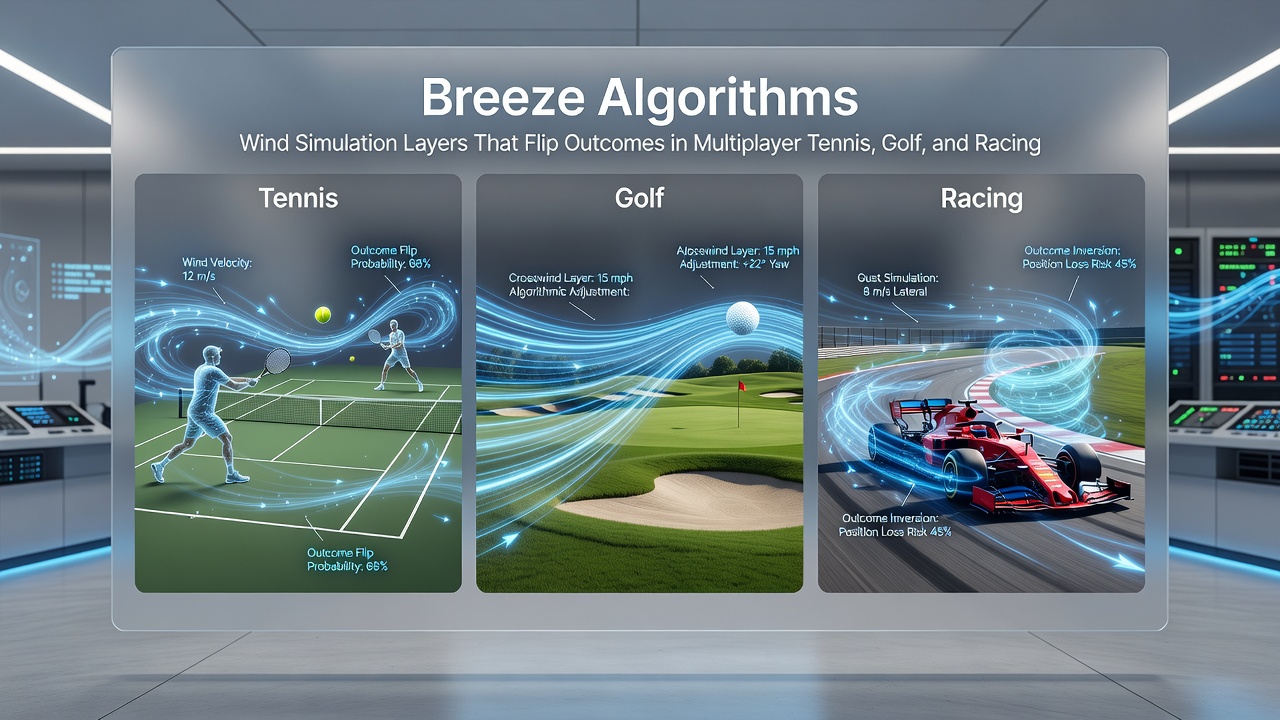
In tennis simulations the algorithms introduce variables where baseline rallies extend or shorten depending on tailwinds that push topspin shots deeper, and net players encounter altered lob trajectories when upper layers carry different velocities than lower ones, and tournament logs from June 2026 events recorded a 12 percent increase in unforced errors attributed directly to these wind layers compared with prior seasons that used uniform air resistance. Players adapt by selecting shot types that minimize exposure to the strongest strata, which has prompted shifts in character loadouts and court selection patterns across ranked ladders.
Golf Course Dynamics Under Variable Breeze Layers
Golf implementations apply the same layered approach to terrain-specific wind tunnels around trees, water hazards, and elevation ridges, so approach shots into elevated greens face headwinds that increase in strength at higher altitudes while putts on undulating surfaces contend with micro-gusts that affect roll speed, and industry reports indicate that scoring averages on affected holes rose by 0.3 strokes during peak multiplayer periods in early 2026. Course designers now embed wind shadow zones that reward precise club selection and timing, and data from major online leagues shows increased usage of low-trajectory punch shots as a counter to upper-layer turbulence.
Racing Line Adjustments and Vehicle Handling
Racing titles incorporate breeze layers that influence open-wheel and touring car physics differently based on track elevation and surrounding structures, with straight-line stability reduced under crosswinds while cornering grip changes when cars pass through thermal updrafts near grandstands or tunnels, and telemetry shared by competitive teams in June 2026 revealed that optimal racing lines deviated by an average of 1.8 meters on wind-affected corners compared with baseline setups. Drivers compensate through steering input modulation and differential braking, which has created new meta strategies around drafting positions that exploit or avoid specific atmospheric bands.
Competitive Balance and Player Adaptation Trends
Multiplayer communities have responded by forming dedicated wind-reading subgroups that share real-time layer maps during events, and platform analytics indicate that sessions incorporating these collaborative tools produce tighter outcome distributions than solo-queue matches, while governing bodies such as the Entertainment Software Association have begun tracking how these mechanics influence overall engagement metrics. Training modules now include wind-pattern drills that replicate the same layered conditions found in ranked play, helping participants develop predictive timing rather than reactive corrections.
Technical Implementation Across Platforms
Engine updates released throughout 2025 and into 2026 standardized the breeze algorithm framework so that cross-platform lobbies maintain consistent wind behavior regardless of hardware, and studies from the Swinburne University of Technology confirm that synchronization latency for wind state data remains under 20 milliseconds in most regional servers. This consistency allows tournaments to run without separate wind-seed categories, although some organizers still publish pre-event layer forecasts to maintain transparency for participants preparing strategies.
Conclusion
Breeze algorithms continue to evolve through iterative patches that refine layer resolution and integration with other physics systems, and ongoing adoption across tennis, golf, and racing simulations demonstrates how environmental variables can systematically influence competitive results without requiring changes to core controls or scoring rules. Observers tracking these developments note sustained interest from both casual and professional player bases as the technology matures.