Blueprint Battles: Designing Winning Strategies Through Advanced Analytics in Online Tennis, Hockey, and Racing Simulations
Clara Krause · May 16, 2026
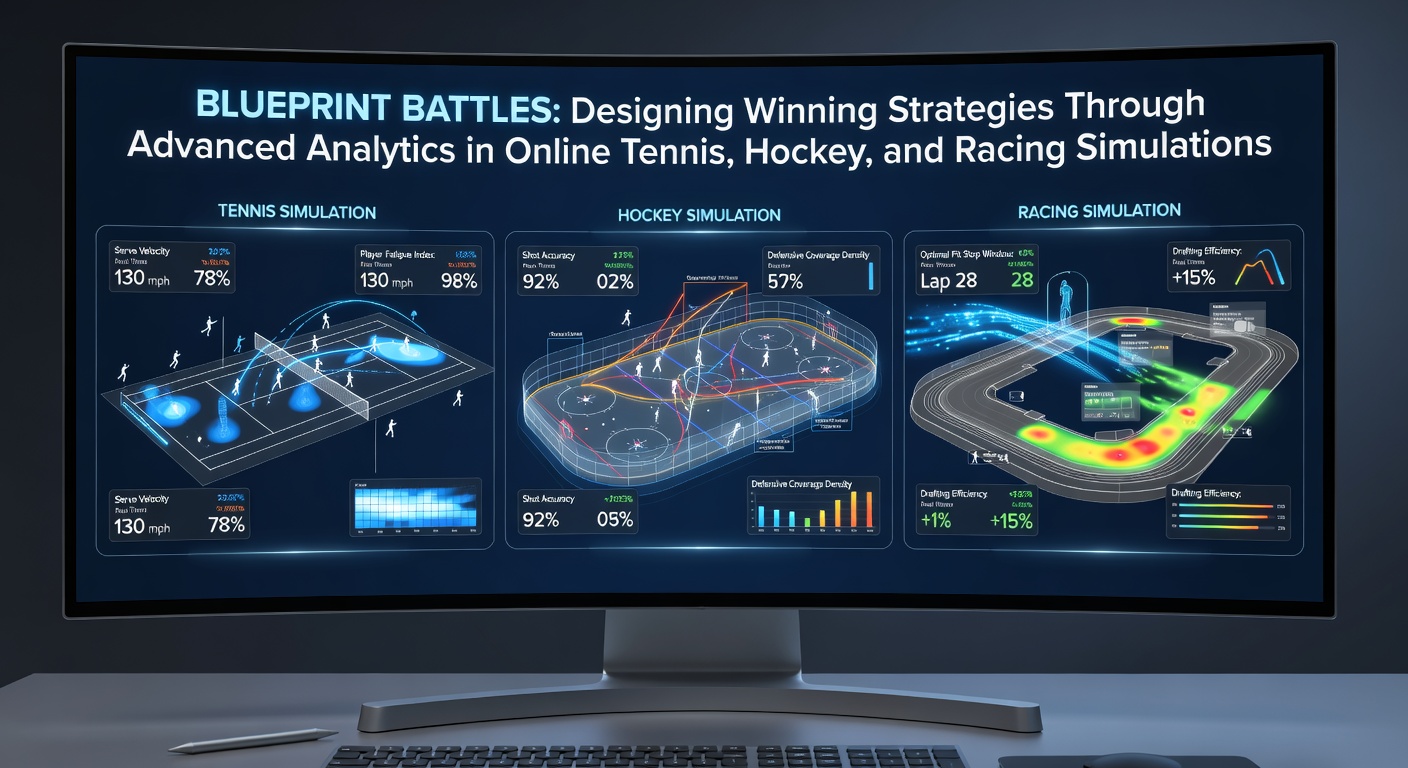
Blueprint Battles: Designing Winning Strategies Through Advanced Analytics in Online Tennis, Hockey, and Racing Simulations
Online sports simulations have shifted toward data-driven design where players build strategies from layers of performance metrics rather than instinct alone, and this approach shows up clearly in tennis, hockey, and racing titles. Developers now embed real-time tracking tools that log every serve angle, puck possession sequence, and cornering speed so participants can refine tactics before matches begin. As of May 2026 platforms continue to release updated analytics suites that process thousands of data points per session, giving competitors the ability to map opponents' tendencies with precision.
Core Metrics Reshaping Tennis Simulations
Tennis sims track shot placement heat maps, serve velocity distributions, and rally length averages that players review through interactive interfaces. These numbers reveal patterns such as an opponent's preference for cross-court forehands during extended exchanges, allowing users to adjust positioning and shot selection accordingly. Researchers at universities in North America have documented how consistent review of these datasets correlates with higher win rates in ranked ladders, because participants learn to exploit statistical weaknesses rather than relying on memorized sequences.
Advanced filters separate data by surface type and fatigue level, so a player can simulate best-of-five sets under varying conditions and observe how error rates climb after the third set. One popular platform recently added machine-learning overlays that predict likely return locations based on historical serve data from the same opponent pool, cutting down preparation time for tournament brackets.
Hockey Analytics and Possession Strategies
Hockey simulations emphasize zone-entry success rates, shot-quality metrics, and defensive pairing efficiency that teams study between games. Data streams capture every pass completion and blocked shot location, then aggregate them into visual boards that highlight high-danger scoring areas. Observers note that top-ranked clubs in these environments spend hours dissecting opponent power-play formations, adjusting defensive assignments to reduce expected goals against by measurable margins.

Coaches in simulation leagues import historical match files from the prior season to build matchup-specific lineups, and they test those combinations against AI recreations of rival rosters. The process mirrors professional scouting workflows where small adjustments in forecheck intensity produce measurable shifts in puck-recovery percentages. Platforms now include export functions that let users feed their custom datasets into third-party modeling tools for deeper pattern recognition.
Racing Simulations and Telemetry Optimization
Racing titles deliver granular telemetry on throttle application, brake pressure curves, and tire-wear projections that drivers analyze lap by lap. Participants compare their sector times against ghost replays of faster competitors, identifying exact corners where entry speed or apex angle needs adjustment. According to figures released by the Entertainment Software Association, racing sim communities generate the highest volume of user-uploaded telemetry files among all sports genres, reflecting the precision required to shave milliseconds in competitive events.
Teams in endurance-style races coordinate fuel maps and tire strategies using predictive models that factor track temperature trends and traffic density. Data from Australian motorsport research groups shows that drivers who integrate these models into pre-race planning achieve more consistent finishing positions across multi-hour events. Real-time dashboards update during practice sessions so adjustments can be validated before qualifying begins.
Integrating Cross-Game Analytics Platforms
Many players now use unified dashboards that pull data from multiple simulation titles, letting them apply lessons learned in one sport to another. A tennis player accustomed to reading serve-pattern heat maps can transfer that skill to studying defensive zone coverage in hockey or cornering lines in racing. Software bridges connect APIs from different developers, standardizing how metrics appear so users spend less time reformatting files and more time interpreting trends.
Industry reports from European gaming associations indicate steady growth in cross-title analytics subscriptions through 2026, driven by players who treat these tools as core preparation rather than optional extras. The same datasets that flag fatigue in tennis rallies can highlight energy-management issues during long stints on virtual circuits, creating transferable strategic advantages across genres.
Conclusion
Advanced analytics have become the foundation for competitive preparation across online tennis, hockey, and racing simulations, supplying the raw material from which winning strategies emerge. Players who master these tools gain repeatable edges through targeted adjustments rather than trial-and-error experimentation. As platforms continue refining their data pipelines in 2026, the gap between casual participants and data-literate competitors continues to widen in measurable ways.