Adaptive Algorithms Redefine Competitive Edges in Multiplayer Baseball, Football, and Golf Simulations
Ines Washington · Aug 13, 2026
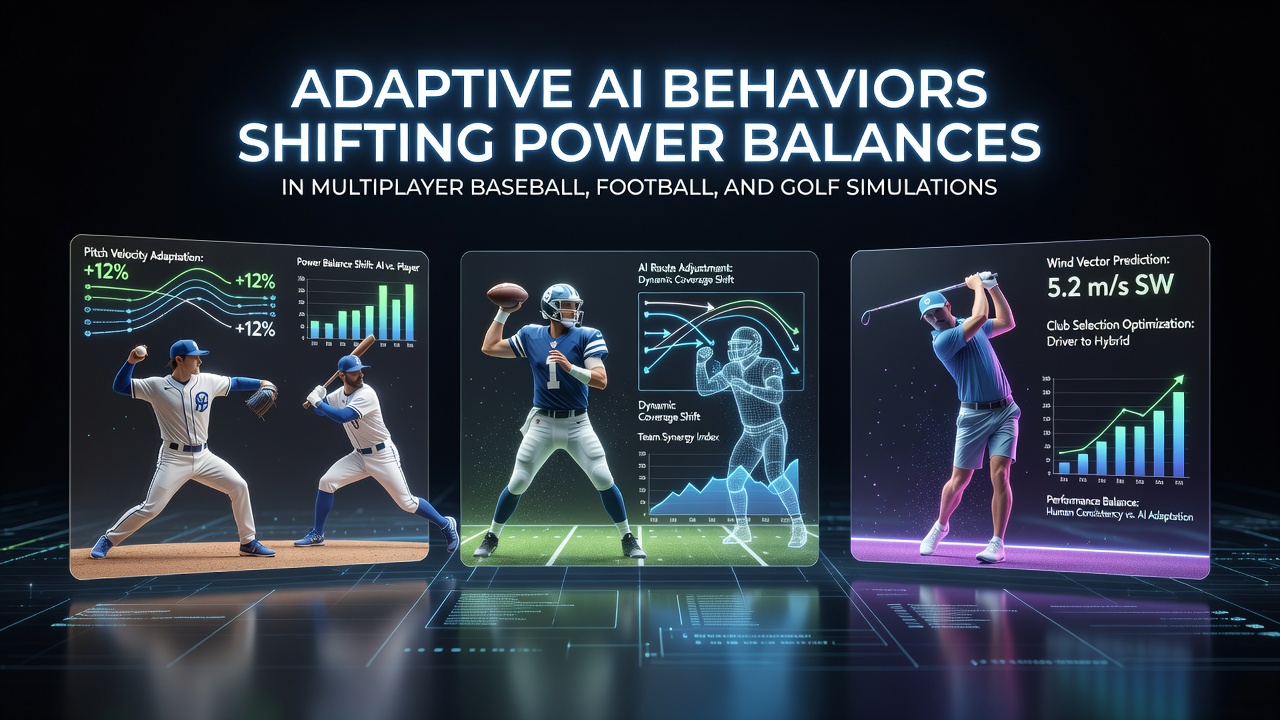
Adaptive Algorithms Redefine Competitive Edges in Multiplayer Baseball, Football, and Golf Simulations
Adaptive AI systems now monitor player tendencies across extended sessions in baseball, football, and golf simulations, adjusting opponent responses in real time to maintain engagement levels. Developers integrate machine learning models that track swing timing, route running decisions, and club selection patterns, then modify defensive alignments or wind conditions accordingly. As of August 2026 these mechanisms appear in major titles, where data from millions of matches informs incremental behavior shifts without requiring manual patches.
Core Mechanisms Driving AI Adaptation
Researchers at institutions including the University of California have documented how reinforcement learning allows AI entities to evolve strategies mid-match, responding to individual user habits rather than fixed scripts. In baseball simulations this manifests through pitchers altering pitch sequences after observing batter preferences over several innings, while fielders reposition based on hit probability calculations updated each play. Football titles apply similar logic when defensive backs adjust coverage zones after repeated route combinations from the same offense, creating scenarios where early advantages erode as the AI learns. Golf environments incorporate terrain and weather variables that adapt to repeated club choices, forcing players to vary approaches or face increasingly precise virtual opponents.
Studies from the Entertainment Software Association reveal participation growth in these adaptive modes, with session lengths extending when AI opponents scale difficulty proportionally to demonstrated skill. Observers note that power balances tilt toward users who introduce variability early, since predictable patterns trigger faster AI countermeasures. Yet consistent execution across varied conditions still determines long-term success rates according to aggregated match data.
Impacts Across Specific Sports Simulations
Baseball platforms demonstrate pronounced shifts when AI bullpens warm up pitchers whose arsenals counter emerging hitting trends, a process that unfolds over multiple at-bats rather than static difficulty tiers. Multiplayer leagues report tighter standings as teams adapt lineups against evolving AI scouting reports generated from prior games. Football simulations show analogous patterns in play-calling, where AI defenses recognize formation tendencies and deploy disguised coverages that reduce yardage gains on subsequent downs. Golf rounds incorporate dynamic pin placements and lie adjustments that penalize repeated reliance on the same shot shapes, prompting players to expand shot repertoires or accept higher scores.
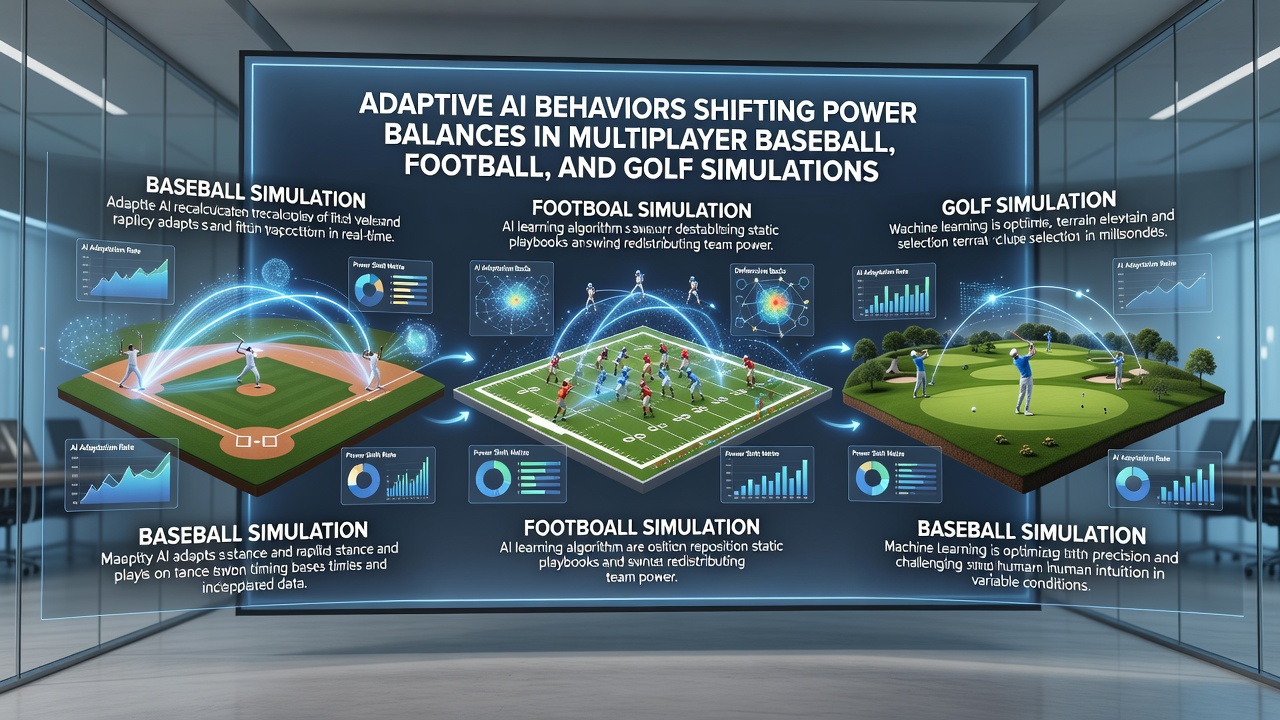
These changes redistribute advantages away from rote repetition toward adaptive decision-making, according to performance metrics compiled across platforms. Players who previously dominated through memorized sequences encounter steeper resistance once AI models update internal parameters. Data collected by industry analysts indicates win-rate convergence between high-skill and mid-skill cohorts in adaptive modes compared with static AI settings.
Multiplayer Dynamics and Strategic Adjustments
Team-based formats in football and baseball require coordinated responses to AI evolution, since individual adaptations affect collective outcomes. Quarterbacks who vary cadence and receiver routes maintain edges longer, while baseball managers who cycle lineups and pitching staffs counteract AI familiarity effects. Golf multiplayer events feature stroke-play formats where cumulative AI adjustments to course conditions influence final leaderboards, rewarding those who diversify shot selections across rounds. Industry reports highlight that communities sharing adaptation counters through forums accelerate collective learning curves, narrowing gaps between early adopters and later participants.
External factors such as connection stability and hardware capabilities interact with these systems, yet core AI learning remains server-side and consistent across devices. Academic papers published through IEEE conferences document reduced frustration metrics when adaptation rates stay within calibrated thresholds, preventing abrupt difficulty spikes that disrupt flow states.
Conclusion
Adaptive AI continues to recalibrate competitive structures in baseball, football, and golf simulations by responding directly to observed behaviors, producing environments where initial edges diminish unless players introduce ongoing variation. Metrics from ongoing deployments show measurable convergence in performance distributions, while development roadmaps signal further refinement of learning parameters through 2026 and beyond. These systems establish new baselines for multiplayer engagement without altering underlying physics or rule sets.